Showing posts with label beech. Show all posts
Monday, 4 July 2011
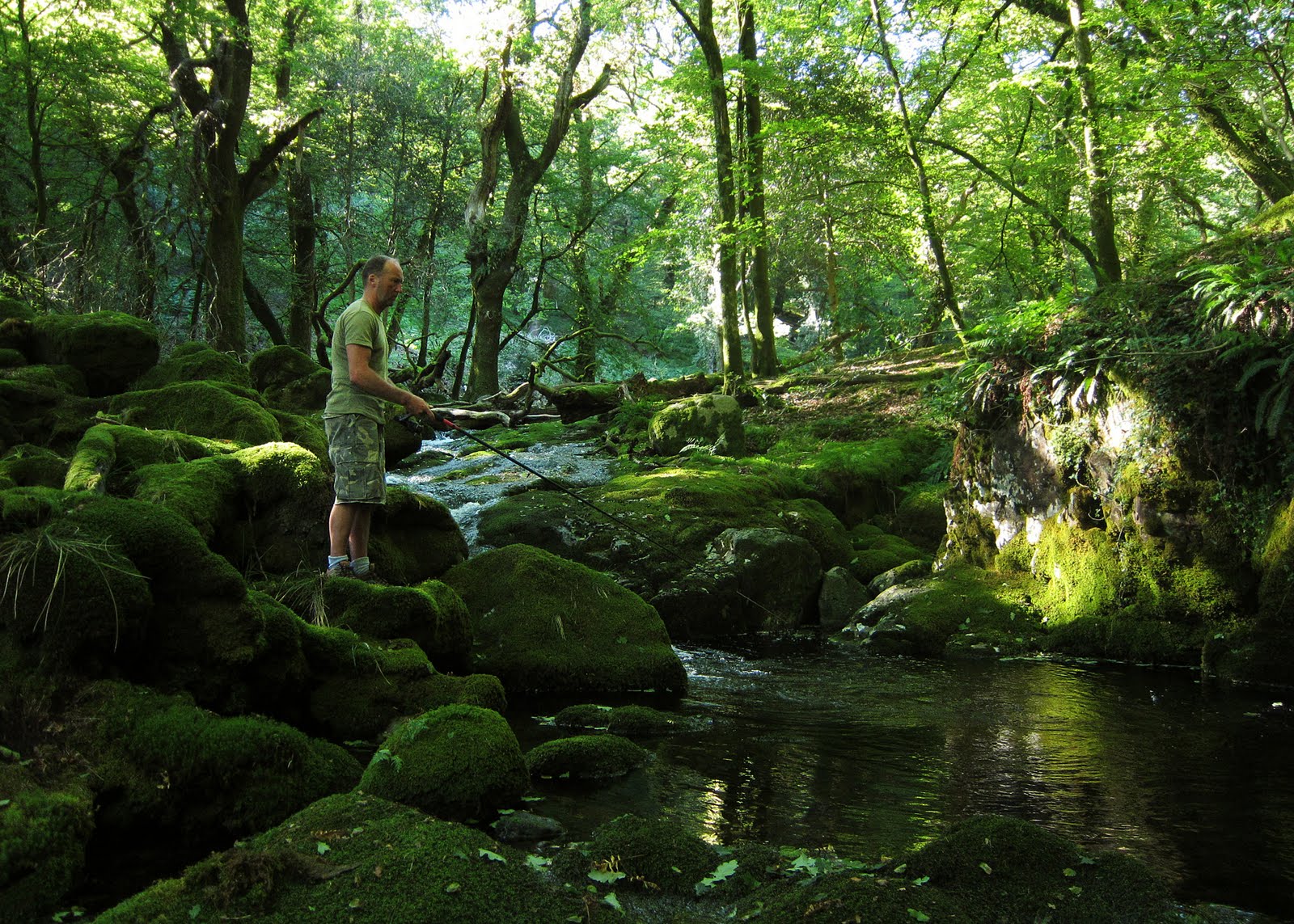
Exploring a hidden Dartmoor wood
Saturday, 14 May 2011
Beech leaf liqueur
I have been doing this liqueur for quite a few years now and it's probably my favourite wild flavoured drink. This is quite easy to make and involves steeping beech leaves in gin for a number of weeks. This old recipe is thought to originate from south-west England (recipe by Richard Mabey). It will be ready to drink when the liquid becomes a light green colour. Definitely worth a try if you like liqueurs, serve chilled from iced glasses. It kind of has a flavour that reminds me of freshly mowed lawns.
Recipe:
Recipe:
A bottle of gin steeped in beech leaves for 3 weeks
100- 200 g white sugar (depending on how sweet you like it) dissolved in 250 ml of water per pint of gin
100 ml of brandy.
Use young and fresh beech leaves that are stripped from their twigs. Half fill a large container with these leaves and then pour over the gin. Seal and leave for three weeks before straining the liquid off. Dissolve the sugar with the water and add the brandy. Add this to the beech leaf gin and bottle, this should produce almost 2 bottles of beech leaf liqueur.
100- 200 g white sugar (depending on how sweet you like it) dissolved in 250 ml of water per pint of gin
100 ml of brandy.
Use young and fresh beech leaves that are stripped from their twigs. Half fill a large container with these leaves and then pour over the gin. Seal and leave for three weeks before straining the liquid off. Dissolve the sugar with the water and add the brandy. Add this to the beech leaf gin and bottle, this should produce almost 2 bottles of beech leaf liqueur.

Sunday, 30 January 2011
Wooden spoon making
Just a quick simple photo guide to making wooden spoons. Using an axe take a slice out of a piece of wood (I used beech for these two different styled spoons) about an inch thick and 12 inches long (depending how long you want it).
Then with a marker pen draw out the shape of the spoon on the wood and cut out the shape roughly with a small hand saw. Once you have the rough shape, start carving with a small knife until you are satisfied with the shape.
You will need a special knife called a 'crooked knife' for carving out the actual bowl of the spoon. Fast forward and much sanding later all done. When it comes to oiling I usually use a light edible oil like walnut oil.
Subscribe to:
Posts (Atom)