Cherry spoon, coffee stained and oiled with walnut oil
Showing posts with label lightweight bushcraft. Show all posts
Saturday, 19 March 2016
Sunday, 2 March 2014
Field Test: Maxpedition pocket organisers (the mini and the fatty)
A quick look at a couple of maxpedition pocket organisers for backpacking and trekking. The organisers are usually used for EDC but make great organisers when backpacking. They can be used for all your little gadgets and such as well as used as a first aid kit or survival kit. The two pocket organisers are the 'mini' and the 'fatty'. The mini is a smallish EDC pocket organiser, while the fatty is larger and deeper. Generally, the mini is more than adequate for carrying items for backpacking trips but if you need extra storage the fatty is a fair bit larger and has the addition of another zipped pocket that can be used for an interdependent first aid kit.
Mini Tech specs:
Very compact 4 x 6 x 0.75 size
Drops into pants cargo pocket or backpack/bag
Full clamshell opening main compartment with dual zips
Inside left: Slip pocket; key ring; elastic organizer with 6 divisions
Inside right: Slip pocket; tie-down loop; elastic organizer with 4 divisions
Front exterior: 1.5 x 3 loop field for patches; mesh slip pocket with hook-and-loop closure
Back exterior: Carry handle; attachment webbing
MOLLE compatible
Attach using two 3" TacTie Attachment Straps (optional accessory)
1050-denier nylon construction with reinforced stitching throughout
Fatty Tech specs:
Compact 5 x 7 x 2in size
Drops into or attaches onto backpack or bag
Full clamshell opening main compartment with dual zips
Inside left: Slip pocket; key ring; tie-down loop, elastic organizer with 9 divisions Inside right: Zipper pocket; elastic organizer with 6 divisions
Inside center has additional elastic loop
Front exterior: 2 x 3in loop field for patches; mesh slip pocket with hook-and-loop closureBack exterior: Oversized carry handle; attachment webbing
Friday, 28 February 2014
Gear we like: handmade wooden stacking mugs by Snow Peak
These wooden cups by Snow Peak come in three different sizes which are stackable for easy storing. This is the wooden version of their popular titanium cups. Hand-crafted in Japan they are made of Japanese Cherry Birch.
Friday, 14 February 2014
Thursday, 6 February 2014
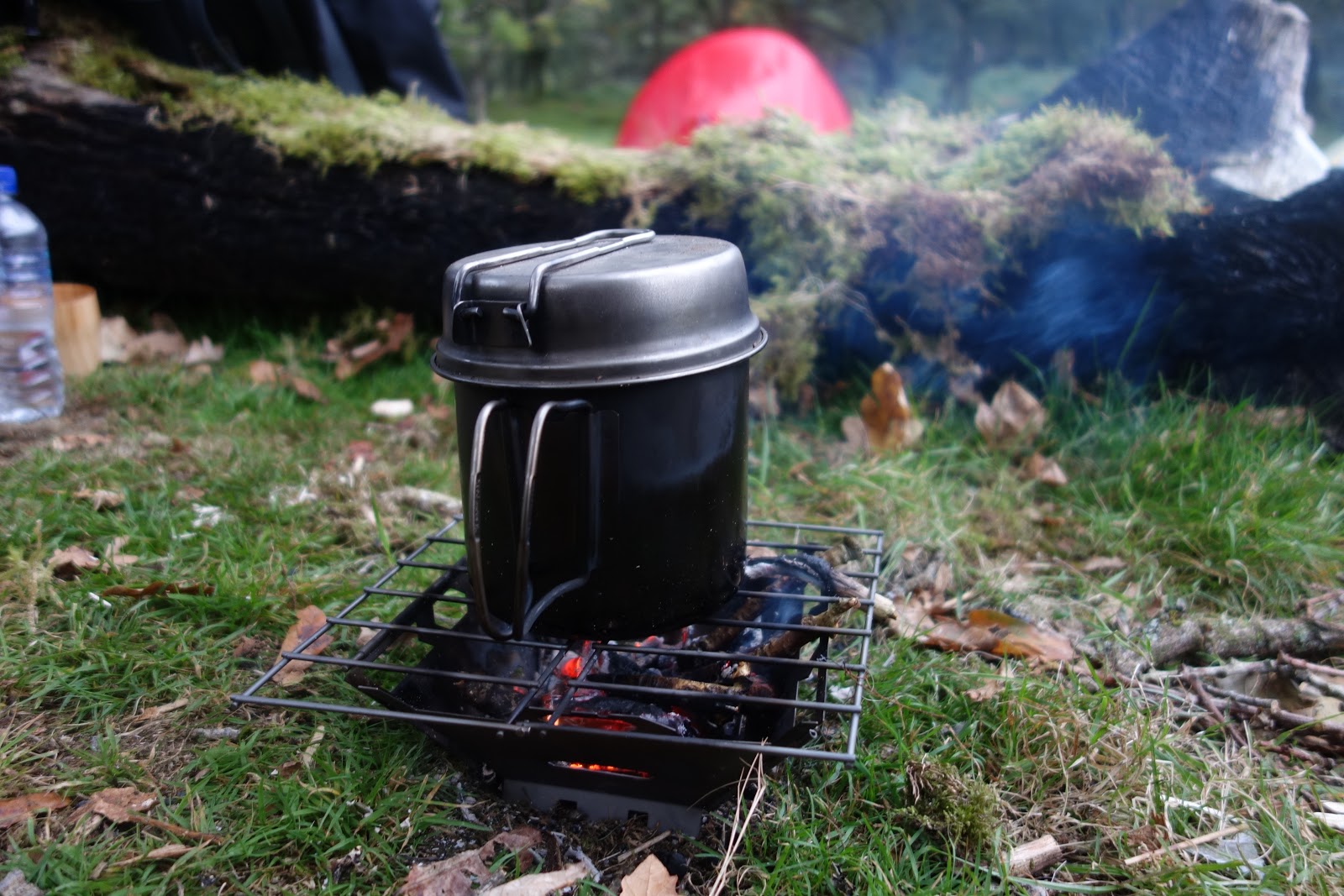
Gear we like: Titanium Fire box grill by Vargo
Vargo are well known for making titanium products and the fire box grill is one of their new products. I have not tested this myself but it looks pretty good for potential backpacking trips as the grill could be used for barbecuing as well as the usual saucepan use. The set-up looks pretty easy and the whole thing flat packs into a nylon sleeve making it easily transportable.
Tech Specs:
- Grate size: 8 x 8 inches (205 x 205 mm)
- Folded size: 8 x 4.25 (205 x 110 mm)
- Weight: 5.8 oz. (194 grams) (Stainless Steel 310g)
- Open Height: 3 inches (80 mm)
The only negative is the cost, however, it also comes in stainless steel.
Saturday, 1 February 2014
Gear we like: Lance Ockenden knives
Lance Ockenden hand-made knives, this one is the pocket pal in cocobolo wood.
Check out his website:
http://www.driftwoodwalker.co.uk/
Thursday, 23 January 2014
Gear we like: The Vertex Ultralight stove
The Vertex Ultralight stove is also designed to support a popular alcohol burner (the Trangia Spirit Burner) used by many minimalist backpackers. The great thing about denatured alcohol is that you can buy it at virtually any hardware store around the world.
Weighs only 1.8 ounces and packs smaller than your trail map - the perfect ultralight backpacking stove. The curved design creates incredible strength with very little mass. The stove has no moving parts, assembles in seconds, and packs smaller than your trail map, so it can be tucked into even the thinnest pockets in your pack.
It serves the essential functions of fuel support, windscreen, and pot-stand in a simple and elegant design.
Specification:
Material: Tempered 301 Brushed Stainless Steel
Assembled Dimensions: 4.84 in. X 2.87 in. X 3.0 in.
Weight: 1.8 ounces (50 grams)
Currently a kickstarter project:
http://www.kickstarter.com/projects/1903954393/vertex-ultralight-backpacking-stove
Saturday, 18 January 2014
Field test: Sven saw (lightweight folding bow saw)
A very useful camping and backpacking saw that can be folded into itself, making it easily transportable in a backpack. This one is the 21 inch blade variety and weighs in at 1 lb. Folded the saw is 24 inches in length. The blade folds into the handle for safety during transport.
Sunday, 31 March 2013
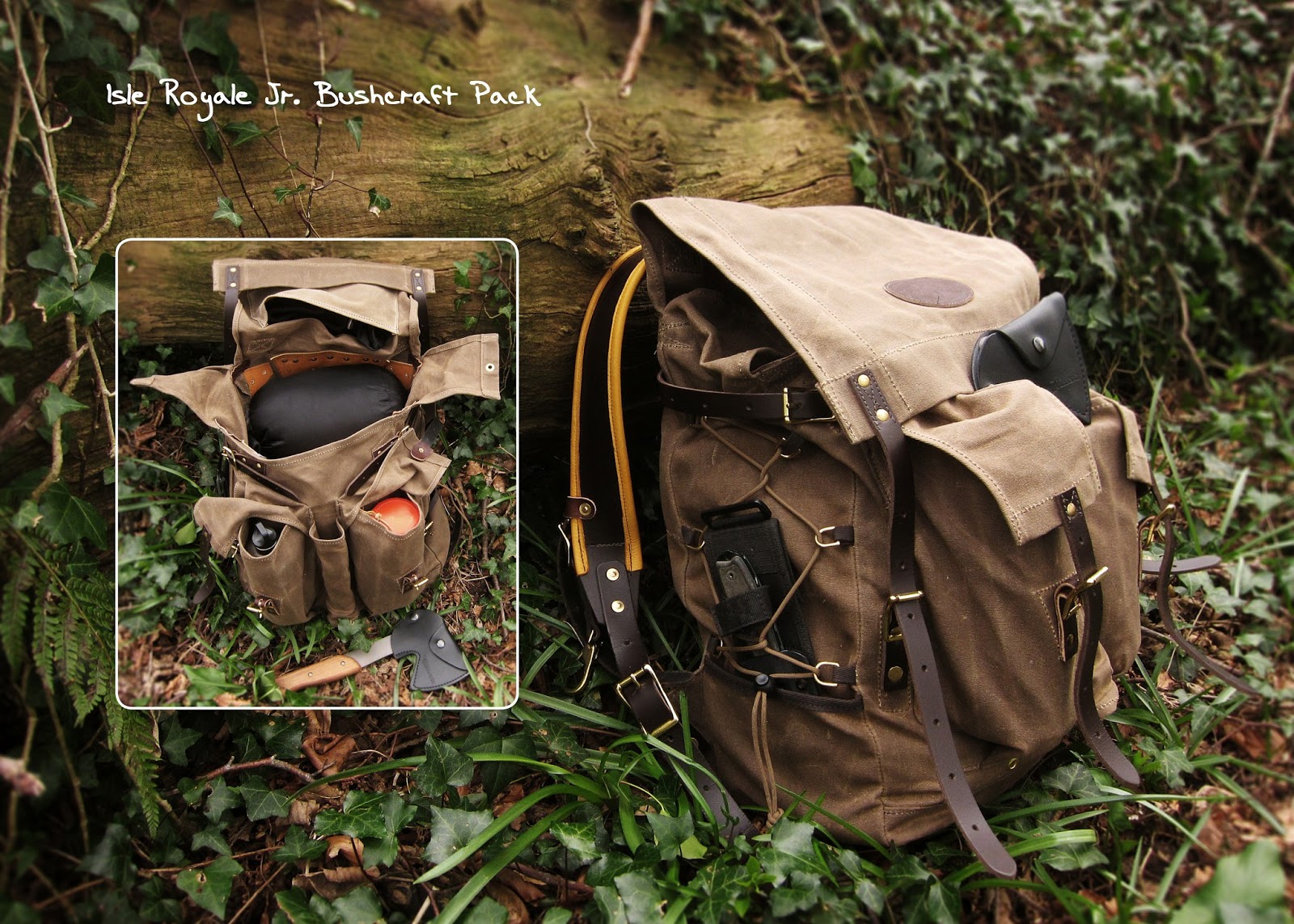
Traditional style backpacks: Frost River Isle Royale Bushcraft Pack
With the popularity of bushcraft quite a few traditional style backpacks are on the market besides the old favourite bergen style backpacks. These range from quality offerings from Fjallraven to some hand-made and more expensive specialty backpacks. While I would say some of these new backpacks are little more than a fashion accessory and not particularly practical for backpacking, some are exceptionally well made as well as being highly functional. With this in mind I have recently had the chance to use an example of the latter made by Frost River called the Isle Royale Bushcraft Pack.
First impressions of the backpack are that this is indeed a high quality product and built pretty much like a tank. Weighing in at a hefty 2.5 kg this is not a light backpack but the pack itself is surprisingly roomy. This version is the junior version and it also retails in a larger senior version. At a guess I would say this pack is roughly about 50 cubic litres which provides ample room for an overnight or weekend trip. The pack has also two large external pockets, easily room enough for a couple of one litre water bottles as well as an internal pocket on the inside of the lid. On the external sides of the backpack there is also pockets with compression straps. I do like the design of the backpack where they have put the large external pockets on the main body rather than to the sides as this makes travelling through dense undergrowth easier and less likely to snag. Between the two external pockets is a hatchet/axe sleeve. Also, behind each of the external pockets, there is another deep pocket, each with a brass grommet drain hole in the bottom. Further capacity can be gained from the sturdy lash points from the bottom on the bottom of the pack.
Every single attachment point, buckle and seam on this backpack has been designed extremely well. All buckles and d-rings are made of solid brass and the straps are made of high quality leather. The main backpack shoulder straps themselves are made with padded leather wrapped in deer hide and there is also an adjustable leather sternum strap.
When I field tested the backpack I was carrying approximately 10 kg which consisted of a standard overnight trip (tarpaulin, sleeping bag, sleeping mat, spare clothes, food and cooking utilities etc.). I found the backpack pretty comfortable to carry, however, the backpack does not have a hip belt so all the weight is carried on your shoulders. So this backpack is not really designed for heavy haulage or long distance trips.
Summary, this is an exceptionally made and robust backpack and would appeal to bushcrafty types who are looking for a traditional style backpack. The backpack overall remains highly functional, purposeful and uncomplicated.
Exceptional quality, good functionality, durability, materials and design.
First impressions of the backpack are that this is indeed a high quality product and built pretty much like a tank. Weighing in at a hefty 2.5 kg this is not a light backpack but the pack itself is surprisingly roomy. This version is the junior version and it also retails in a larger senior version. At a guess I would say this pack is roughly about 50 cubic litres which provides ample room for an overnight or weekend trip. The pack has also two large external pockets, easily room enough for a couple of one litre water bottles as well as an internal pocket on the inside of the lid. On the external sides of the backpack there is also pockets with compression straps. I do like the design of the backpack where they have put the large external pockets on the main body rather than to the sides as this makes travelling through dense undergrowth easier and less likely to snag. Between the two external pockets is a hatchet/axe sleeve. Also, behind each of the external pockets, there is another deep pocket, each with a brass grommet drain hole in the bottom. Further capacity can be gained from the sturdy lash points from the bottom on the bottom of the pack.
Every single attachment point, buckle and seam on this backpack has been designed extremely well. All buckles and d-rings are made of solid brass and the straps are made of high quality leather. The main backpack shoulder straps themselves are made with padded leather wrapped in deer hide and there is also an adjustable leather sternum strap.
When I field tested the backpack I was carrying approximately 10 kg which consisted of a standard overnight trip (tarpaulin, sleeping bag, sleeping mat, spare clothes, food and cooking utilities etc.). I found the backpack pretty comfortable to carry, however, the backpack does not have a hip belt so all the weight is carried on your shoulders. So this backpack is not really designed for heavy haulage or long distance trips.
Summary, this is an exceptionally made and robust backpack and would appeal to bushcrafty types who are looking for a traditional style backpack. The backpack overall remains highly functional, purposeful and uncomplicated.
What is good
Exceptional quality, good functionality, durability, materials and design.
What is not so good
Weight, but then again it not designed for lightweight backpacking. Lacks a hip belt which would affect its use for heavy haulage and long-distance trekking.
What is its ideal usage
Overnight and weekend bushcraft style trips, short haulage and canoeing.
Tech specs:
Volume: ~50 litres
Weight: 2.5 kg
Pockets: 4 external and 1 internal
Closure: Internal rain flaps, large flap over main compartment
Shoulder straps: Harness leather, foam pad, buckskin, plus sternum strap.
Compression system: Leather strap and buckle, para cord and d-rings.
Base: double canvass
Materials: 18 oz. waxed canvas, premium leather, solid brass hardware.
Sunday, 17 February 2013
Field test: Spyderco Bill Moran
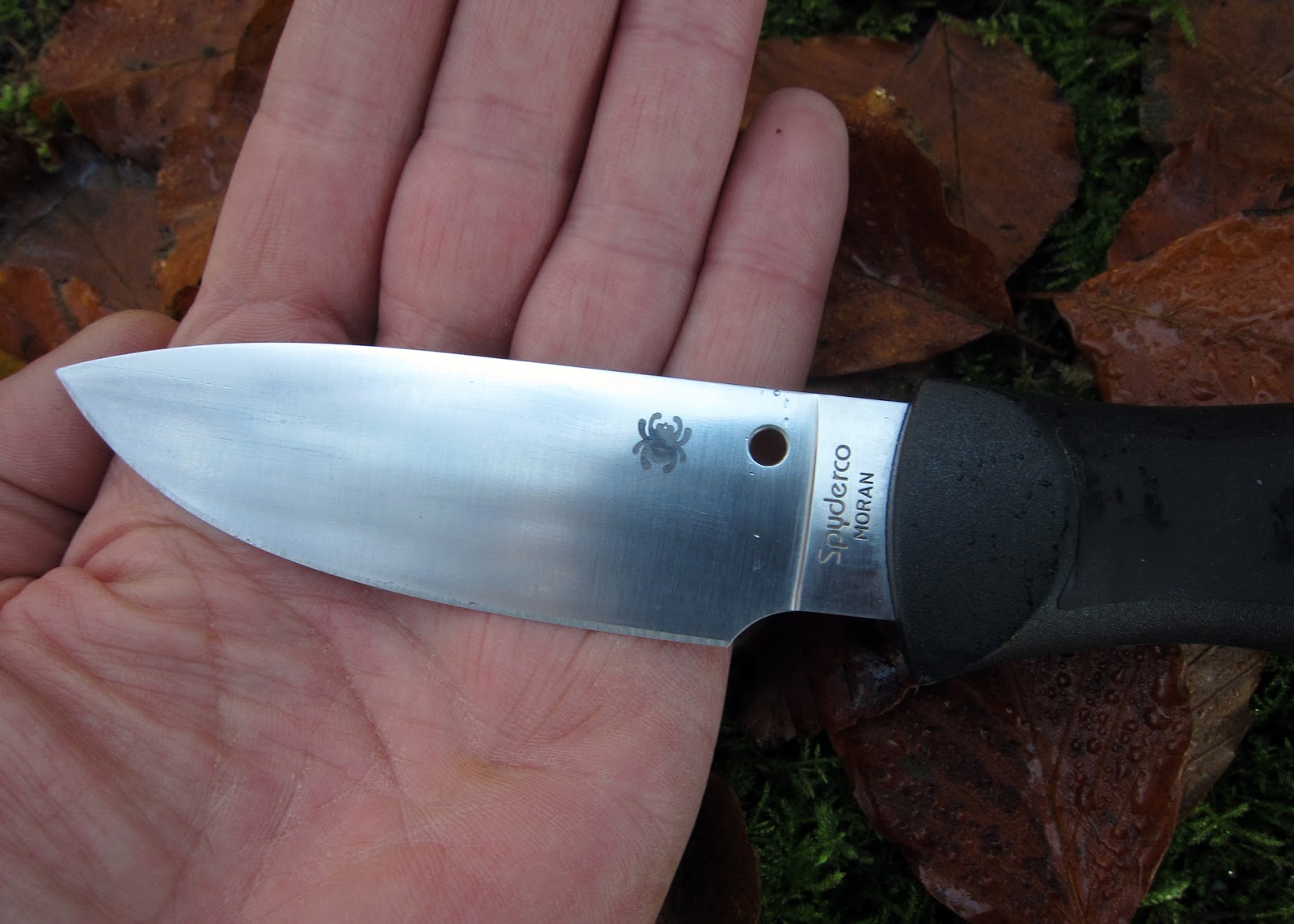
I’ve recently been given a couple of spyderco fixed blade knives to try out and review, the first being the spyderco Bill Moran and the second the small Enuff. First off with the Bill Moran which I have field tested over the last couple of weeks .I’m not that particularly familiar with spyderco fixed blades so this was really a first although like most of us I have seen their popular folders.
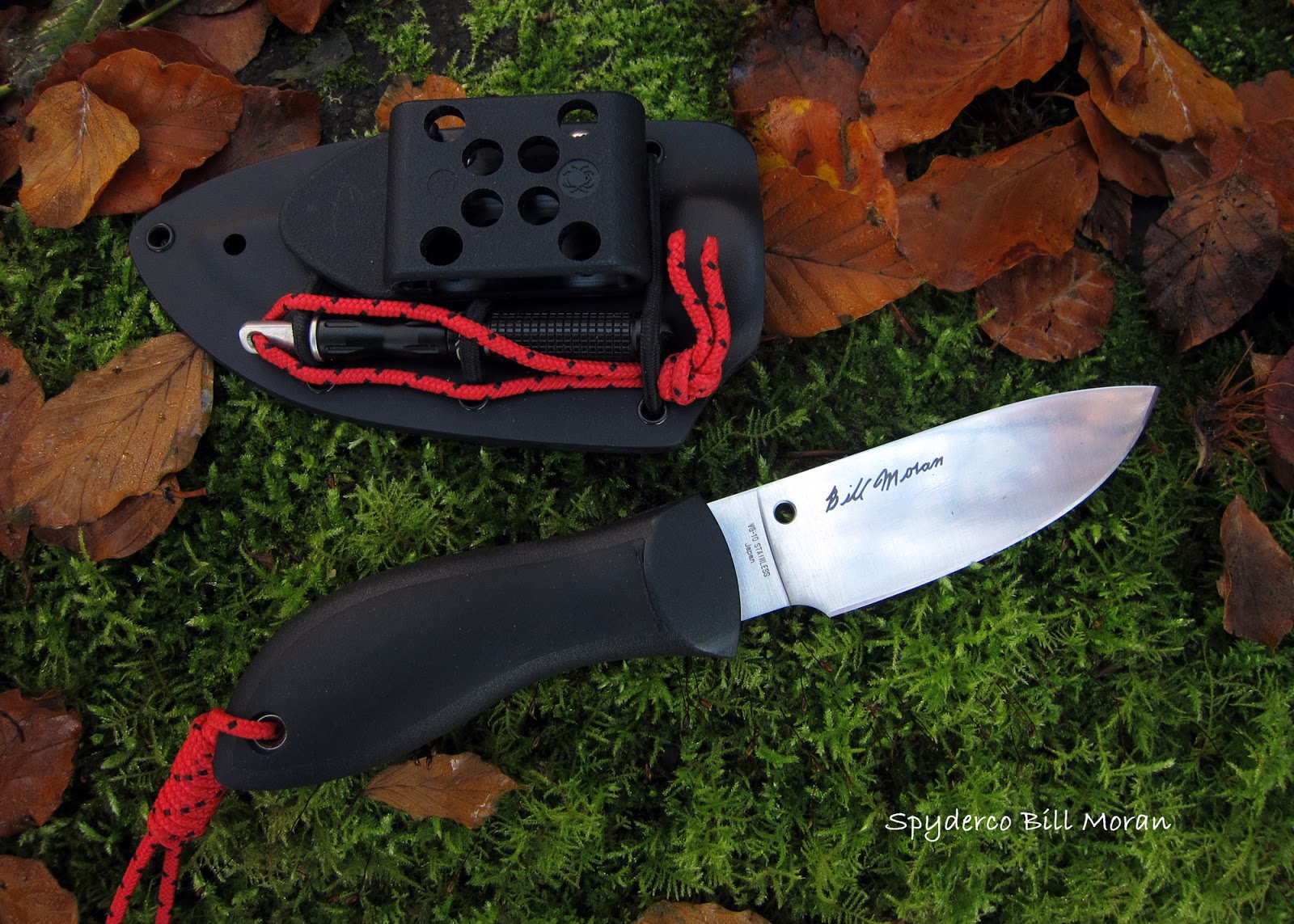
The spyderco Bill Moran is an extremely lightweight camping/hunting knife that has a total weight of 85g (3oz) for a blade that is just under 4 inches. In previous incarnations these knives have been under the production model called ‘featherweights’ for obvious reasons. Actually due to the balance of the knife it feels somewhat lighter. The handle is crafted from fiberglass reinforced nylon (FRN) with rubbery Kraton inserts on both sides and on the thumb ramp.In contrast to Spyderco's flat handled folders, the Moran's curved handle is three-dimensional with swells that fit the palm providing excellent grip when wet or dry. This knife does not have a full tang so it is not really designed for certain bushcraft activities like batoning for example but it does excel as a cutting tool.
The drop point style blade is flat ground and milled from VG-10 stainless steel. If anyone has used VG-10 they will know of its much earned reputation as a great all-around steel: corrosion resistant, tough enough for utility use, and capable of taking and holding a keen edge. Out of the box this blade is extremely sharp and probably the sharpest I’ve come across. The Moran comes with a pancake style black Boltaron sheath which is well constructed and has great positive retention and a drainage hole drilled toward the bottom. The sheath also comes with spyderco’s own 6 position TekLock fastening system which allows the knife to be carried vertically or horizontally. In conclusion, this knife is rather like a more expensive Mora. However, the knife is extremely light and well made with modern materials,excellent steel and finished off with an ergonomic design which I think justifies its price.
What is good
Lightness, quality, VG10 steel, and blade sharpness.
What is not so good
If you want to do more bushcraft activities like batoning you might want to think of a knife with a thicker width and a full tang.
What is its ideal usage
Lightweight camping/hunting knife that excels at food preparation, game preparation and other camping chores
Tech specs:
Overall length: 8 inches (203 mm)Blade length: 3.88 inches (99 mm)Blade steel: VG 10Blade thickness: ⅛ inchWeight: 3 oz (84 g)
The spyderco Bill Moran is an extremely lightweight camping/hunting knife that has a total weight of 85g (3oz) for a blade that is just under 4 inches. In previous incarnations these knives have been under the production model called ‘featherweights’ for obvious reasons. Actually due to the balance of the knife it feels somewhat lighter. The handle is crafted from fiberglass reinforced nylon (FRN) with rubbery Kraton inserts on both sides and on the thumb ramp.In contrast to Spyderco's flat handled folders, the Moran's curved handle is three-dimensional with swells that fit the palm providing excellent grip when wet or dry. This knife does not have a full tang so it is not really designed for certain bushcraft activities like batoning for example but it does excel as a cutting tool.
The drop point style blade is flat ground and milled from VG-10 stainless steel. If anyone has used VG-10 they will know of its much earned reputation as a great all-around steel: corrosion resistant, tough enough for utility use, and capable of taking and holding a keen edge. Out of the box this blade is extremely sharp and probably the sharpest I’ve come across. The Moran comes with a pancake style black Boltaron sheath which is well constructed and has great positive retention and a drainage hole drilled toward the bottom. The sheath also comes with spyderco’s own 6 position TekLock fastening system which allows the knife to be carried vertically or horizontally. In conclusion, this knife is rather like a more expensive Mora. However, the knife is extremely light and well made with modern materials,excellent steel and finished off with an ergonomic design which I think justifies its price.
What is good
Lightness, quality, VG10 steel, and blade sharpness.
What is not so good
If you want to do more bushcraft activities like batoning you might want to think of a knife with a thicker width and a full tang.
What is its ideal usage
Lightweight camping/hunting knife that excels at food preparation, game preparation and other camping chores
Tech specs:
Overall length: 8 inches (203 mm)Blade length: 3.88 inches (99 mm)Blade steel: VG 10Blade thickness: ⅛ inchWeight: 3 oz (84 g)
Sunday, 10 June 2012
Rat ESEE Izula with spalted ash scales
Well the old parachord wrap on my Rat (now called ESEE) Izula knife was getting a bit ropey and instead of redoing the parachord I decided to make some scales instead. I used spalted ash to make the scales. For those unfamiliar with spalted wood the wood has become colonised by fungi which gives it the distinctive markings and it is fairly commonly found in ash and beech trees. The fungi has a dark pigmentation which is known as zone lines. After using the knife for a couple of days I can say that it much more comfortable to handle than parachord particularly when using for extended periods.
Friday, 6 April 2012
Field test: Backcountry boiler
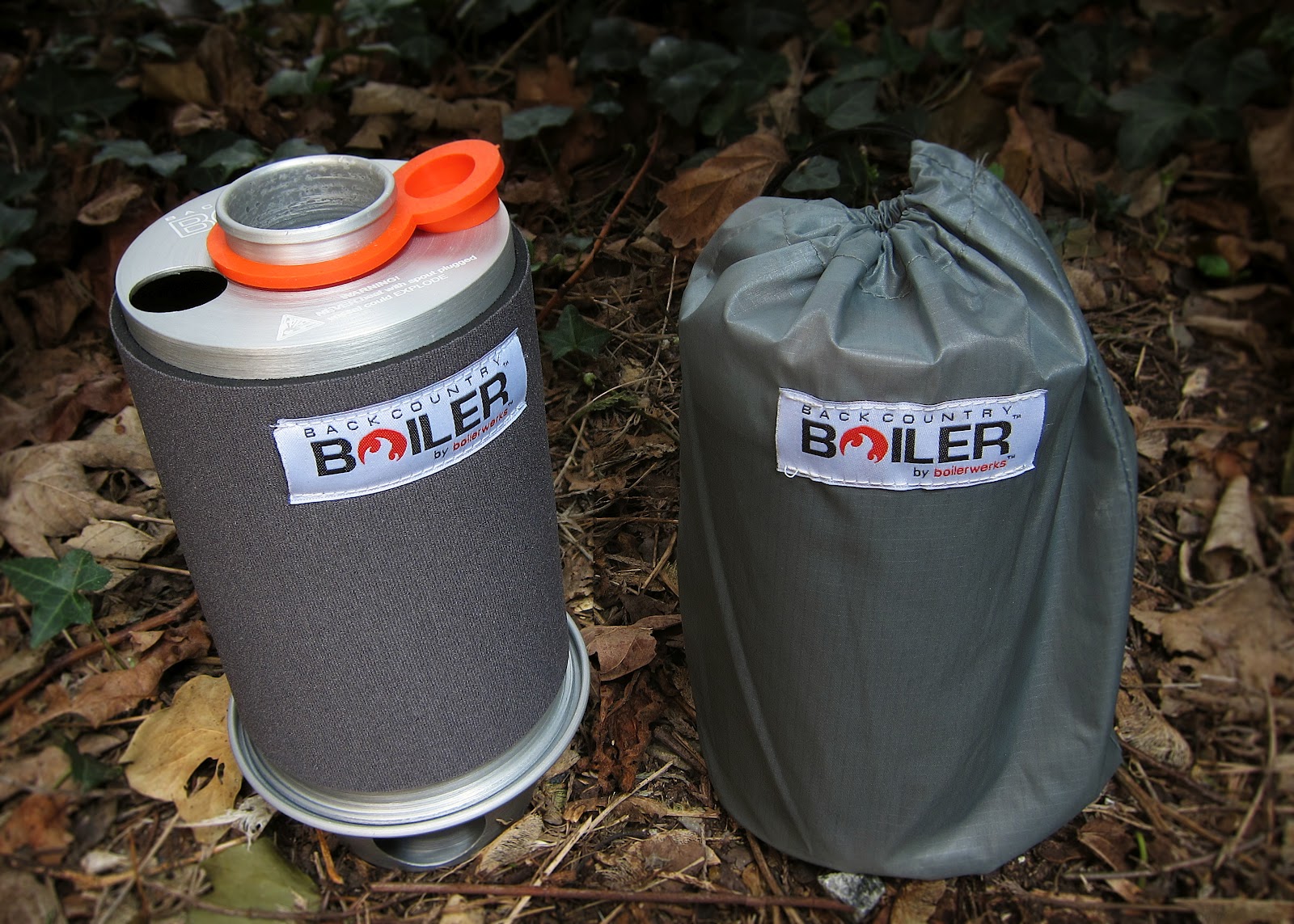
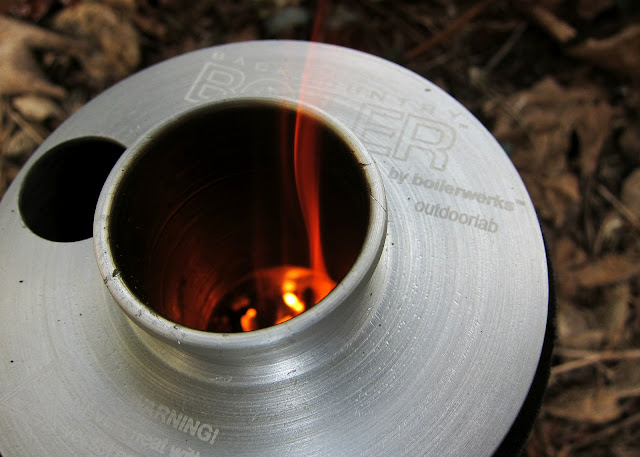
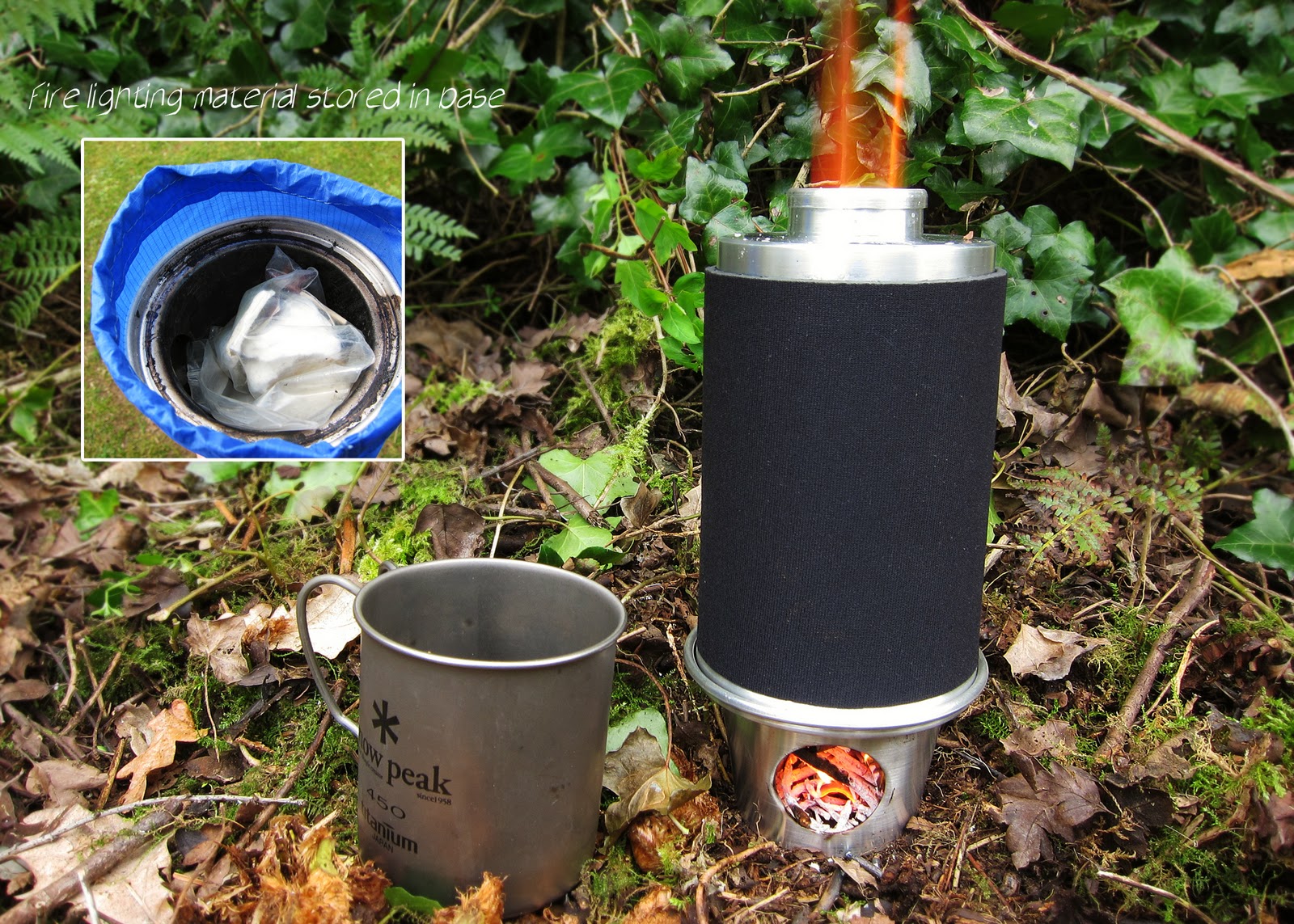
The backcountry boiler is made by boilerworks through the kickstarter website (www.kickstarter.com). I ordered mine quite a while ago and it has finally made its way across the Atlantic. For those of you that are familiar with chimney kettles, the backcountry boiler can be basically classed as a very lightweight modern version of the traditional kelly kettle (wood burning kettle). Chimney or fire kettles such as the these work on the principle of a double walled chimney to heat up a chamber of surrounding water. I reviewed another version of the chimney kettle 'the mkettle' a while back, but this version is like the Mercedes of chimney kettles. The main structure is kept very light by being made of hard anodized aluminium and weighs in at just over 220g (8oz.). One of the main advantages for using wood burning kettles like these instead of gas stoves when backbacking is that you obviously do not need to carry gas cannisters with you which cuts down of the weight carried. All you need to do is gather some combustible materials while on your trek.
Backcountry boiler specs:
Composition: Hard anodized aluminium
Weight: 220g (8 oz)
Capacity: 500 ml (16 oz) About 1 Pint
Dimensions: 19cm (7 1/4”) Tall by 10cm (4”) Diameter
Pack: silicon-impregnated nylon stuff sack
Saturday, 18 June 2011
Field test: Buck hartsoot neck knife
The blade itself is black oxide coated and made of S30V stainless steel and comes with a small sheath and weighs less than 15g.
Tech specs:
Blade Steel: S30V
Length Overall: 4 1/4" (10.8 cm.)
Blade Length: 1 7/8" (4.8 cm.)
Blade Shape: Talon
Handle Material: S30V Steel with Black Oxide coating.
Carry System: Reinforced Molded Nylon
Weight: .5 oz. (14.8 g.)
Friday, 25 March 2011
Field test: mKettle (mini wood burning kettle)
Most of us are familiar with chimney or fire kettles such as the Kelly Kettle that work on the principle of a double walled chimney to heat up a chamber of surrounding water. However, these kettles tended to be quite bulky and heavy and less than ideal for lightweight backpacking.
Recently a couple of lightweight versions of this old design have come on to the market, the more readily available 'mKettle' and the 'Backcountry Boiler' which is available through advanced ordering via http://www.theboilerwerks.com/about/ . These new wood burning kettles are of a very similar design with the Backcountry Boiler coming in lighter at around 230g in weight and the mKettle at around 370g. When using, fill the firebase with combustible materials (e.g twigs, small sticks, dry grass, pine cones) and then place the kettle on top of the firebase. The mKettle can boil approximately a pint of water (500ml) in around 5 to 8 minutes depending on conditions and the source and dryness of the kindling. The mKettle is very robust and light enough for backpacking and is ideal for making hot drinks and rehydrating backpacking meals, it kind of looks like a wood burning 'jetboil'. It also comes with its own stuffsack and a stopper to contain carried water. When stored in the stuffsack the firebase fits inverted into the kettle allowing you to store your firelighting material. Here are the specs:
Composition: aluminium
Weight: 370g (13 oz)
Capacity: 530 ml (18 oz) About 1 Pint
Dimensions: 17cm (7”) Tall by 10cm (4”) Diameter
Pack: Fitted Rip Stop Nylon Carry Bag with D-Rings
Thursday, 3 March 2011
Field test: gearpods
If you are anything like me and always lose small things while backpacking or wonder where you put them, these new storage containers are very useful. While many storage containers exist these new gearpods bring a modular twist to storing small items of gear.
The gearpods themselves come in a variety of sizes which are sold individually or as sets (including pre-made survival kits). The sizes range from the small (1.5 inches) to medium (3 inches) to large (4 inches) to extra large (6 inches). They are made of durable light plastic which can be tightened till they are fairly waterproof (although I have not tested this and they do not have O rings)*. The whole novelty to these storage devices is that they can be joined together using connectors to form a kind of modular multi-kit. At present I use the largest gearpod for my main tools, the medium one for first aid and the smallest for firelighting materials. The possiblities for these containers are really down to the individual (they make good fishing kits too).
*EDIT: The first generation product used a neoprene O-Ring. The second generation products use a friction seal negating the need for the O-Ring.
Saturday, 19 June 2010
Field test: RAT Izula (ESEE Izula)
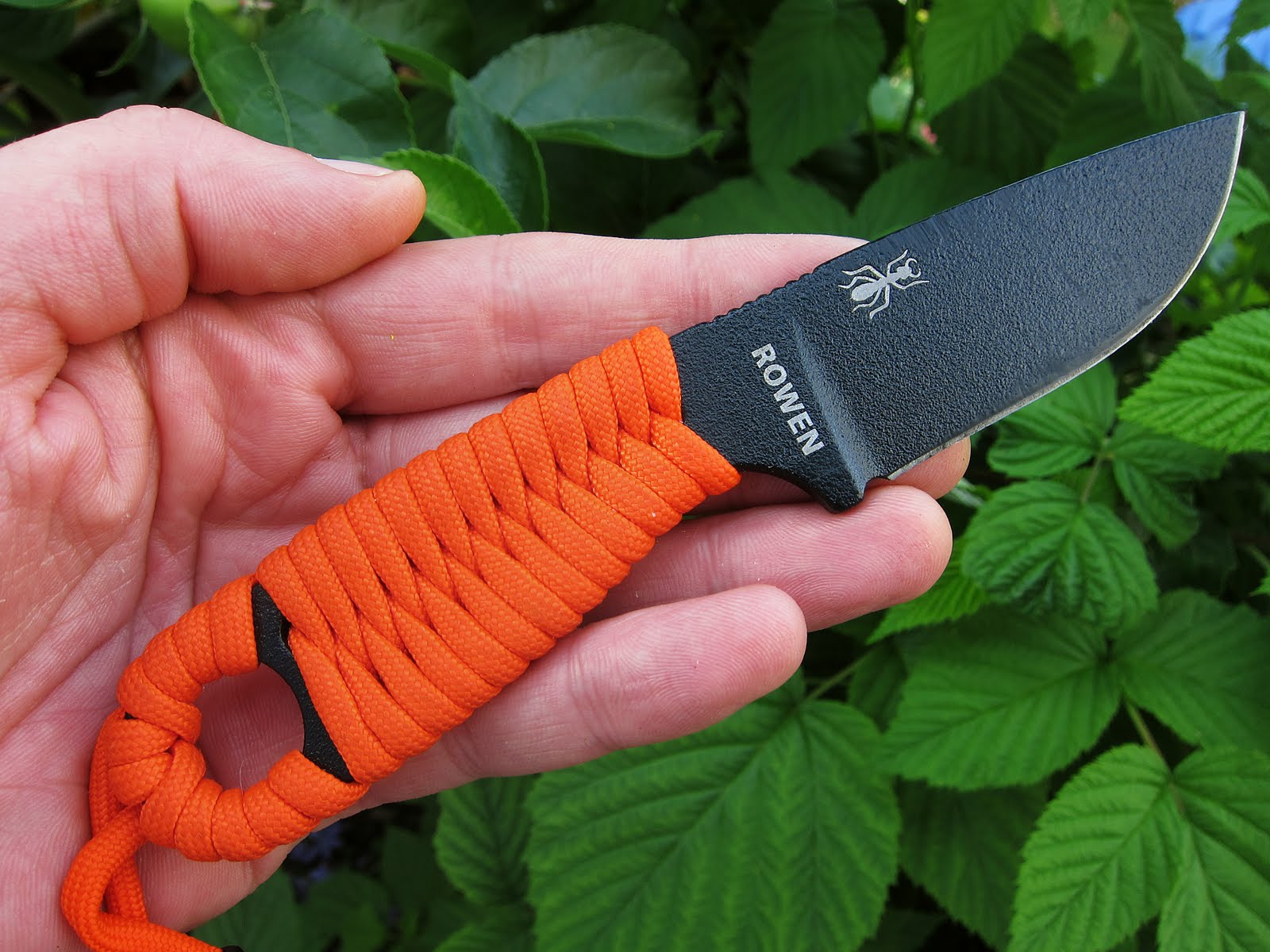
I know a lot of people that are into lightweight backpacking and do not like carrying knives due to the weight. However, because i tend to use a wood burning stove and quite often fish while backpacking I always tend to carry a knife with me. I used to carry a traditional bushcraft knife but i must admit i found it a little on the weighty side. So I was looking for a tough and light fixed-blade knife for some time. The IZULA from rat cutlery is the smallest knife from Randall’s Adventure and Training (RAT) and like all their knives it's one I really like and the one i most use because it's so small.
It has a total length of 6.25 inches (158 mm) allowing you to carry a fixed- blade knife in your pocket. This knife is designed from 1095 carbon steel which is very strong and can hold a very sharp edge. This model has RATs very durable coating on the entire knife and there is no handle, although you can wrap it with paracord like i have done. I have been using the knife for about a year now and it makes a great survival/bushcraft knife and I highly recommend it to any outdoor person. Comes with RAT lifetime replacement warranty.
Tech specs:
Blade length: 63 mm
Blade Material: 1095 Carbon
Overall length: 158 mm
Sheath: Injection molded
Weight: 57 grams (without sheath)
It has a total length of 6.25 inches (158 mm) allowing you to carry a fixed- blade knife in your pocket. This knife is designed from 1095 carbon steel which is very strong and can hold a very sharp edge. This model has RATs very durable coating on the entire knife and there is no handle, although you can wrap it with paracord like i have done. I have been using the knife for about a year now and it makes a great survival/bushcraft knife and I highly recommend it to any outdoor person. Comes with RAT lifetime replacement warranty.
Tech specs:
Blade length: 63 mm
Blade Material: 1095 Carbon
Overall length: 158 mm
Sheath: Injection molded
Weight: 57 grams (without sheath)
Friday, 9 April 2010
Field test: Exotac nanostriker (lightweight fire striker)
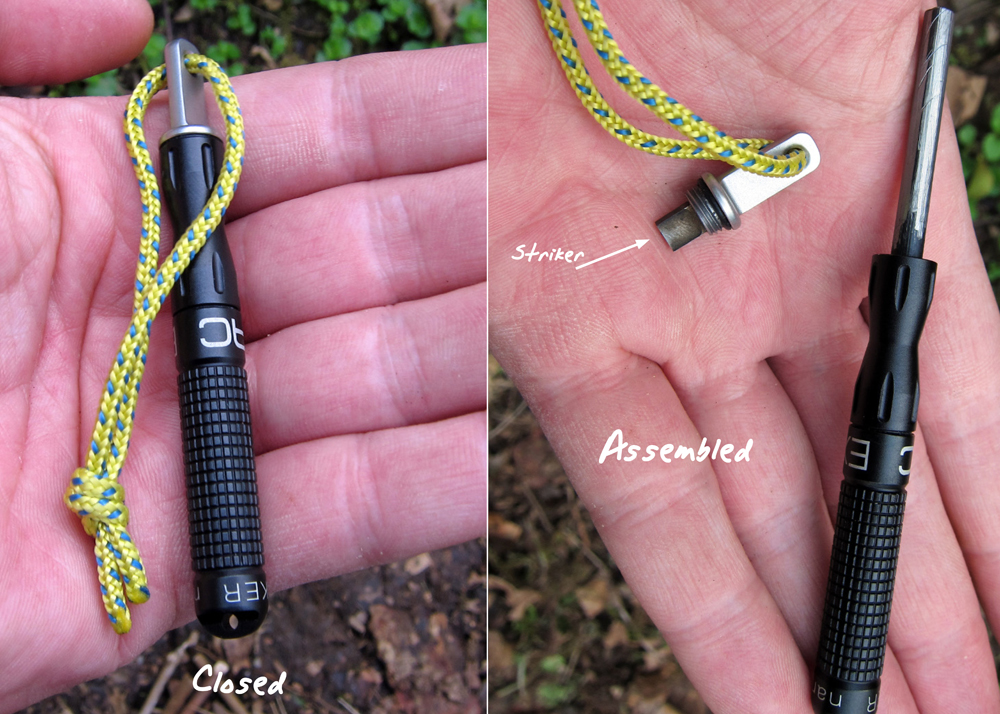
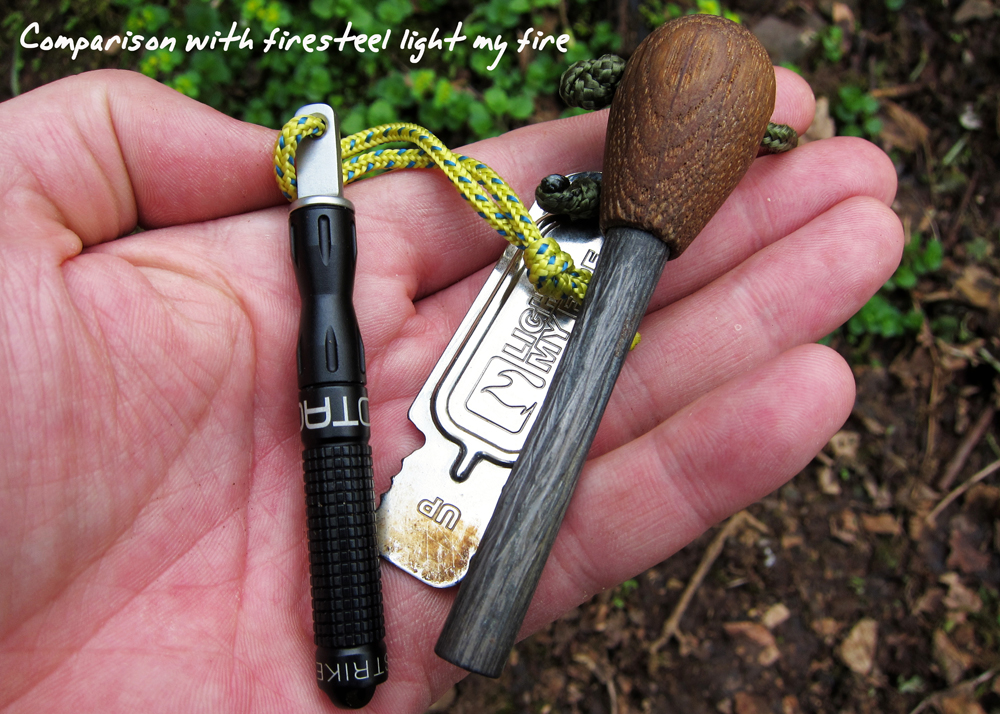
The nanostriker is a lightweight fire striker made by Exotac. It is a compact ferrocium rod that houses in a light but durable aircraft aluminium body. The rod screws into the aluminium case, complete with rubber O-ring, and is protected from both the elements and any sort of damage when stowed in a kit. At the tip of the rod’s handle, another piece unscrews to reveal a fire striker. It’s a nicely engineered and compact (i.e. a lot smaller than a typical fire steel) way to carry a rod and striker together without the bulk of a typical slat striker piece. The nanostriker features a sturdy handle of 303 stainless steel and a uniquely designed 440C stainless steel striker that is hardened to 50HRC. The striker has a shaped cross section (4 sides) to allow numerous sharp edges to ensure good sparking capability. In terms of weight the nanostriker weighs in at 17g which is a lot lighter than most firesteels. Monday, 22 March 2010
Homemade bushbuddy ultra (wood burning camping stove)
I have had a bushbuddy ultra for a couple of years now, but if you fancy making a really cheap one from a couple of cans, this works just as well (though not as elegant I might add). The principle is to create a double skin allowing secondary combustion through the top vents. Ingredients: one big can of tomato soup (800g) and one smaller can of sweet corn to create the double chamber and inner firebox.
You will need to do some drilling to make the holes in the cans similar to the bottom photo before you fit the smaller can into the larger one. This should be a good fit, however, if there are any gaps between the two cans you can always do a bit of welding to form a really tight seal. You will also need to make a stand for the pot, you can make this by roughly cutting another can (about 1/4 of the can in length) so it can freely fit on the main cans. Cut a U shape into this can, so you can feed fuel into the main chamber once the fire is lit and the pot is sitting on top.Once fully operational it should take about 6-8 mins to boil 1 pint.
Sunday, 21 March 2010
Homemade firelighter
Subscribe to:
Posts (Atom)