Showing posts with label outdoor gear. Show all posts

Thursday, 27 March 2014

New Gear: 550 Firecord

This product is currently a kickstarter project so  it has not been tested in anyway. Basically 550 FireCord is 550 parachute cord or "paracord" but with the ability to use it as tinder for fire starting.
So, deploy your 550 FireCord to meet all of your parachute cord needs. For example,zipper pulls and handles to keychains, bracelets and lanyards and as simply as lashing.
When you need the fire tinder remove the inner strands, light just like any fire tinder and build your fire.  After the inner strands are used the outer shell can still be utilized as before. 550 Firecord is also waterproof, however, I am not sure of its longevity in the field and how long it would last when stored. For more information check out:


Sunday, 2 March 2014

Field Test: Maxpedition pocket organisers (the mini and the fatty)

A quick look at a couple of maxpedition pocket organisers for backpacking and trekking. The organisers are usually used for EDC but make great organisers when backpacking. They can be used for all your little gadgets and such as well as used as a first aid kit or survival kit. The two pocket organisers are the 'mini' and the 'fatty'.  The mini is a smallish EDC pocket organiser, while the fatty is larger and deeper. Generally, the mini is more than adequate for carrying items for backpacking trips but if you need extra storage the fatty is a fair bit larger and has the addition of another zipped pocket that can be used for an interdependent first aid kit.


Mini Tech specs:


Very compact 4 x 6 x 0.75 size
Drops into pants cargo pocket or backpack/bag
Full clamshell opening main compartment with dual zips
Inside left: Slip pocket; key ring; elastic organizer with 6 divisions
Inside right: Slip pocket; tie-down loop; elastic organizer with 4 divisions
Front exterior: 1.5 x 3 loop field for patches; mesh slip pocket with hook-and-loop closure
Back exterior: Carry handle; attachment webbing
MOLLE compatible
Attach using two 3" TacTie Attachment Straps (optional accessory)
1050-denier nylon construction with reinforced stitching throughout


Fatty Tech specs:


Compact 5 x 7 x 2in size
Drops into or attaches onto backpack or bag
Full clamshell opening main compartment with dual zips
Inside left: Slip pocket; key ring; tie-down loop, elastic organizer with 9 divisions Inside right: Zipper pocket; elastic organizer with 6 divisions
Inside center has additional elastic loop
Front exterior: 2 x 3in loop field for patches; mesh slip pocket with hook-and-loop closureBack exterior: Oversized carry handle; attachment webbing

Friday, 28 February 2014

Gear we like: handmade wooden stacking mugs by Snow Peak


These wooden cups by Snow Peak come in three different sizes which are stackable for easy storing. This is the wooden version of their popular titanium cups. Hand-crafted in Japan they are made of Japanese Cherry Birch.


Saturday, 8 February 2014

Traditional style hand-forged bushcraft knife

A traditional style Hand-forged bushcraft knife, finished off with leather trim. Made by my local friend Roger Barnard.


Thursday, 6 February 2014

Gear we like: Titanium Fire box grill by Vargo

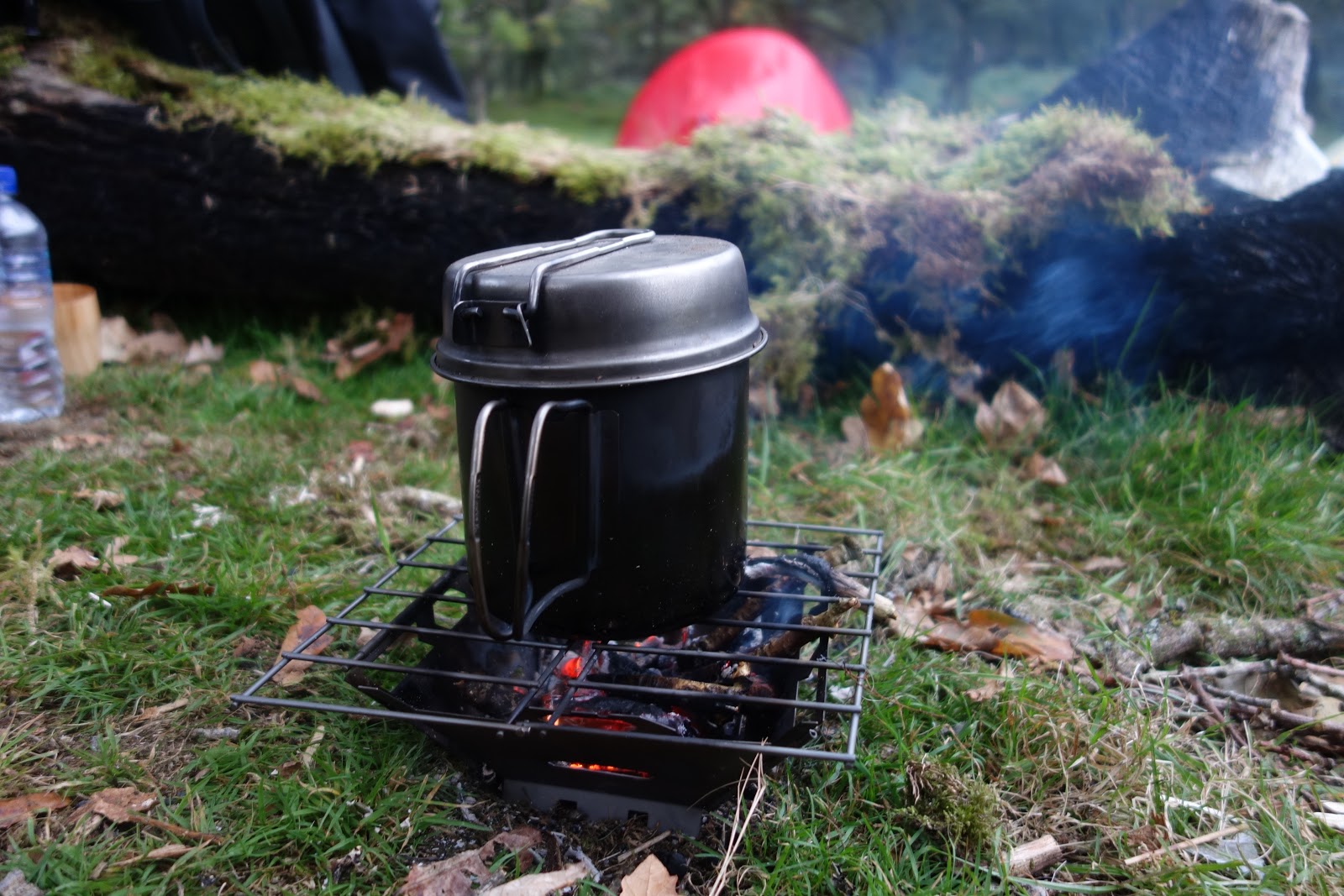
Vargo are well known for making titanium products and the fire box grill is one of their new products. I have not tested this myself but it looks pretty good for potential backpacking trips as the grill could be used for barbecuing as well as the usual saucepan use. The set-up looks pretty easy and the whole thing flat packs into a nylon sleeve making it easily transportable.


Tech Specs:

  • Grate size: 8 x 8 inches (205 x 205 mm)
  • Folded size: 8 x 4.25 (205 x 110 mm)
  • Weight: 5.8 oz. (194 grams) (Stainless Steel 310g)
  • Open Height: 3 inches (80 mm)
The only negative is the cost, however, it also comes in stainless steel.


Saturday, 1 February 2014

Gear we like: Lance Ockenden knives


Lance Ockenden hand-made knives, this one is the pocket pal in cocobolo wood.
Check out his website:

http://www.driftwoodwalker.co.uk/

Thursday, 23 January 2014

Gear we like: The Vertex Ultralight stove


The Vertex Ultralight stove is also designed to support a popular alcohol burner (the Trangia Spirit Burner) used by many minimalist backpackers. The great thing about denatured alcohol is that you can buy it at virtually any hardware store around the world.
  
Weighs only 1.8 ounces and packs smaller than your trail map - the perfect ultralight backpacking stove. The curved design creates incredible strength with very little mass.  The stove has no moving parts, assembles in seconds, and packs smaller than your trail map, so it can be tucked into even the thinnest pockets in your pack.  

It serves the essential functions of fuel support, windscreen, and pot-stand in a simple and elegant design.  

Specification:

Material: Tempered 301 Brushed Stainless Steel
Assembled Dimensions:  4.84 in. X 2.87 in. X 3.0 in.
Weight: 1.8 ounces (50 grams)


Currently a kickstarter project:

http://www.kickstarter.com/projects/1903954393/vertex-ultralight-backpacking-stove


Tuesday, 21 January 2014

Gear we like: Rab xenon hoodie


Lightweight Primaloft insulated hoodie with Pertex Quantum fabrics for versatile lightweight warmth and protection, ideal for Alpine belays.


  • Pertex quantum inner & outer
  • Primaloft One insulation
  • Small weighs 344g
  • Medium weighs 356g
  • Large weighs 378g
  • XLarge weighs 396g

  • XXLarge weighs 424g

Saturday, 18 January 2014

Field test: Sven saw (lightweight folding bow saw)


A very useful camping and backpacking saw that can be folded into itself, making it easily transportable in a backpack. This one is the 21 inch blade variety and weighs in at 1 lb. Folded the saw is 24 inches in length. The blade folds into the handle for safety during transport.

Thursday, 16 January 2014

Gear we like: Tribe One LP Series PackNet


The LP Series PackNet is a good solution for securing external gear to a pack ranging in size from 45 to 110 liters. It has a six point system that can attach to the pack in multiple configurations.


Saturday, 11 May 2013

Gearpods lanterns

Just a couple of tips for using the gearpods survival kits as lanterns. Invert a head torch on the outside to give off a ambient light (this also works well for empty milk cartons).  Or alternatively, use a bit of bungy cord on the outside to attach a light with a diffuser.

Sunday, 31 March 2013

Traditional style backpacks: Frost River Isle Royale Bushcraft Pack

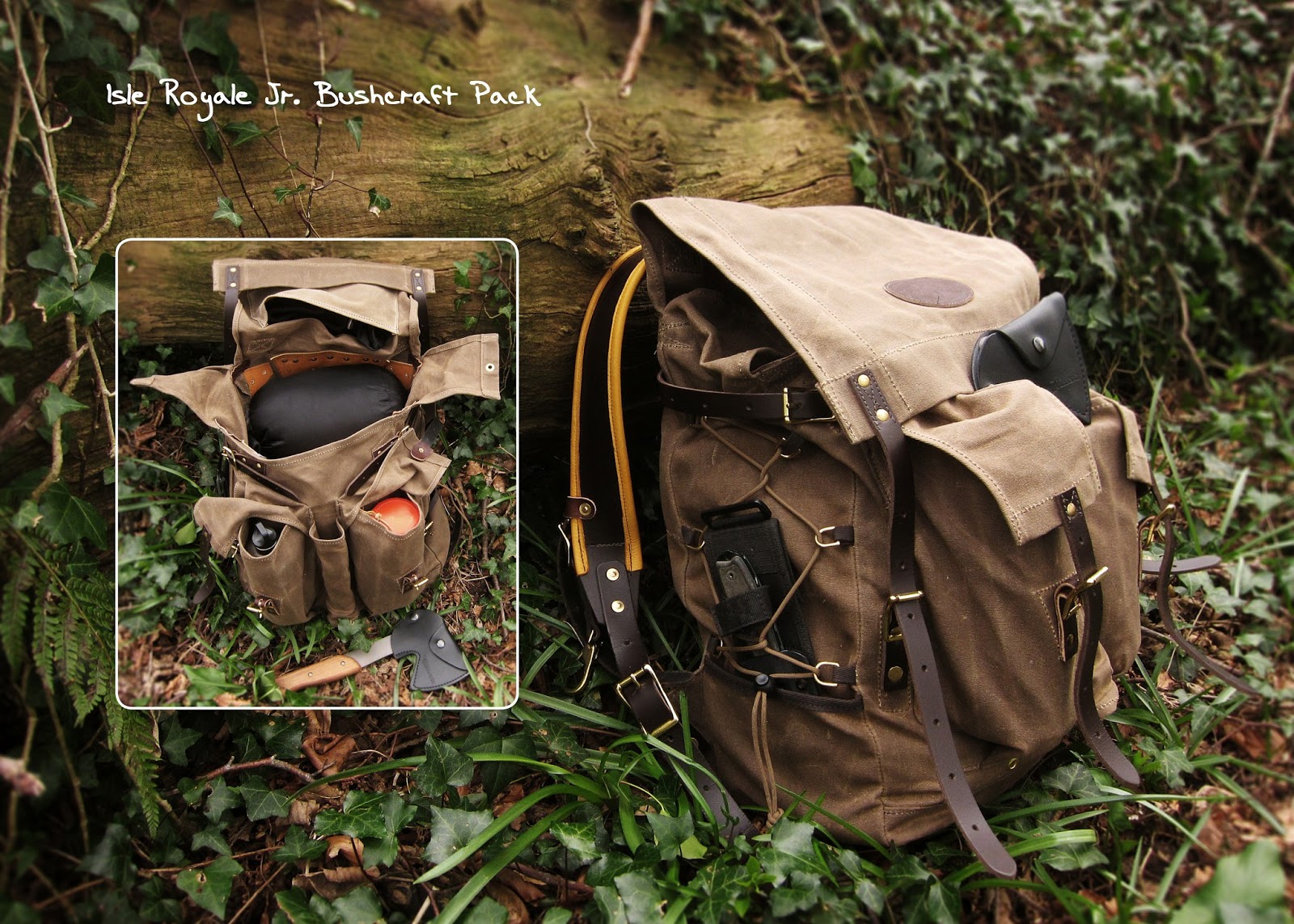
With the popularity of bushcraft quite a few traditional style backpacks are on the market besides the old favourite bergen style backpacks. These range from quality offerings from Fjallraven to some hand-made and more expensive specialty backpacks. While I would say some of these new backpacks are little more than a fashion accessory and not particularly practical for backpacking, some are exceptionally well made as well as being highly functional. With this in mind I have recently had the chance to use an example of the latter made by Frost River called the Isle Royale Bushcraft Pack.


First impressions of the backpack are that this is indeed a high quality product and built pretty much like a tank. Weighing in at a hefty 2.5 kg this is not a light backpack but the pack itself is surprisingly roomy. This version is the junior version and it also retails in a larger senior version. At a guess I would say this pack is roughly about 50 cubic litres which provides ample room for an overnight or weekend trip. The pack has also two large external pockets, easily room enough for a couple of one litre water bottles as well as an internal pocket on the inside of the lid. On the external sides of the backpack there is also pockets with compression straps. I do like the design of the backpack where they have put the large external pockets on the main body rather than to the sides as this makes travelling through dense undergrowth easier and less likely to snag. Between the two external pockets is a hatchet/axe sleeve. Also, behind each of the external pockets, there is another deep pocket, each with a brass grommet drain hole in the bottom. Further capacity can be gained from the sturdy lash points from the bottom on the bottom of the pack.


Every single attachment point, buckle and seam on this backpack has been designed extremely well. All buckles and d-rings are made of solid brass and the straps are made of high quality leather. The main backpack shoulder straps themselves are made with padded leather wrapped in deer hide and there is also an adjustable leather sternum strap.


When I field tested the backpack I was carrying approximately 10 kg which consisted of a standard overnight trip (tarpaulin, sleeping bag, sleeping mat, spare clothes, food and cooking utilities etc.). I found the backpack pretty comfortable to carry, however, the backpack does not have a hip belt so all the weight is carried on your shoulders. So this backpack is not really designed for heavy haulage or long distance trips.


Summary, this is an exceptionally made and robust backpack and would appeal to bushcrafty types who are looking for a traditional style backpack. The backpack overall remains highly functional, purposeful and uncomplicated.


What is good

Exceptional quality, good functionality, durability, materials and design.


What is not so good


Weight, but then again it not designed for lightweight backpacking. Lacks a hip belt which would affect its use for heavy haulage and long-distance trekking.


What is its ideal usage


Overnight and weekend bushcraft style trips, short haulage and canoeing.


Tech specs:


Volume: ~50 litres
Weight: 2.5 kg
Pockets: 4 external and 1 internal
Closure: Internal rain flaps, large flap over main compartment
Shoulder straps: Harness leather, foam pad, buckskin, plus sternum strap.
Compression system: Leather strap and buckle, para cord and d-rings.
Base: double canvass
Materials: 18 oz. waxed canvas, premium leather, solid brass hardware.

Saturday, 16 March 2013

Field test: Thermarest sleep system


Any outdoor bit of gear with the word ‘system’ in it needs checking out in my opinion. As i’m a sucker for multi-functional bits of kit. So what is the Thermarest ‘sleep system’? quite simply it is three bits of gear consisting of a Thermarest sleeping mat, a fitted sheet to cover the mattress and a thermal blanket. These are designed to complement each other to form a sleeping system. In this gear test I used the Thermarest all season Neoair mattress combined with the fitted sheet and Thermarest’s  Alpine 35 down blanket (detailed review here: http://www.theoutdoorlab.com/2012/11/blankets-vs-sleeping-bags-thermorest.html).

The Neoair is a very warm sleeping mat with the mat being rated at a 4.9 R-value and inflates to around 2.5 inches (6.5 cm). The main function of the Fitted Sheet is to bind the Down Blanket to the NeoAir mat. The sheet adds a degree of comfort and perhaps a little bit more thermal protection. However, for lightweight backpackers this is probably not essential to carry. A positive feature of the sheet is the anti-slide straps on the bottom of the sheet. These straps hold the sheet over the mat and prevent the whole system from sliding around on the slick floor of a tent. Finally, the Down blanket completes the system. This combination of all three bits of kit make a very warm, comfortable and versatile sleep system.


Conclusion: After using the system for a number of nights there is no doubt about it that this is sleeping luxury. It is more akin to sleeping in a real bed (well for camping anyway). At a configured weight close to 1.5 kg it might be a little too heavy for weight conscious backpackers and you may want to ditch the sheet as it is not essential. However, for general camping where weight is not an issue it offers an extremely comfortable sleep and is certainly worth considering. In summary, if you are not concerned by the small weight penalty this system provides a flexible, comfortable sleep system.

Tech specs:

Neoair all season mattress: 568 g
Fitted sheet: 200 g
Alpine down blanket: 624 g

Sunday, 17 February 2013

Field test: Spyderco Bill Moran

I’ve recently been given a couple of spyderco fixed blade knives to try out and review, the first being the spyderco Bill Moran and the second the small Enuff. First off with the Bill Moran which I have field tested over the last couple of weeks .I’m not that particularly familiar with spyderco fixed blades so this was really a first although like most of us I have seen their popular folders. 


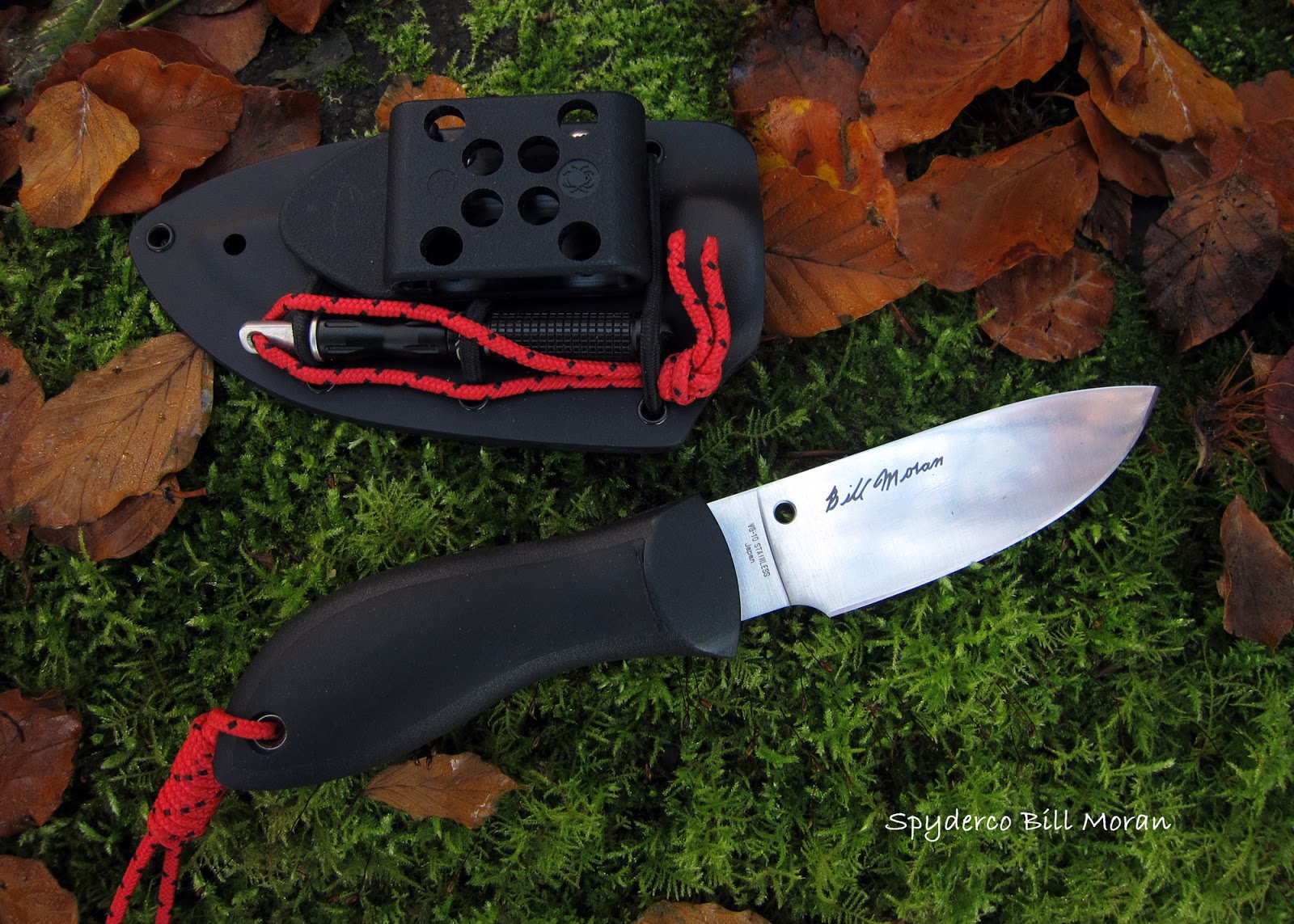
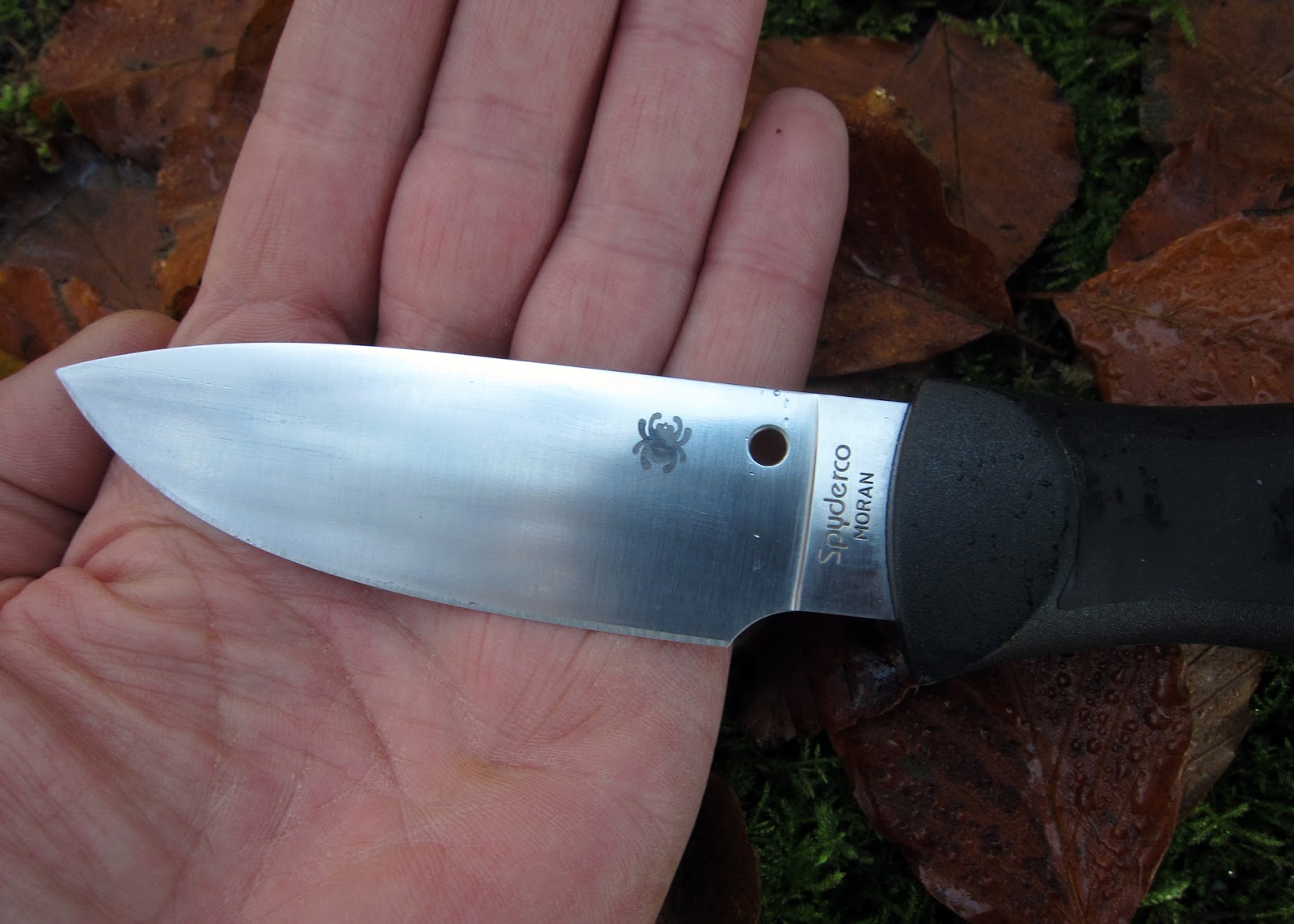
The spyderco Bill Moran is an extremely lightweight camping/hunting knife that has a total weight of 85g (3oz) for a blade that is just under 4 inches. In previous incarnations these knives have been under the production model called ‘featherweights’ for obvious reasons. Actually due to the balance of the knife it feels somewhat lighter. The handle is crafted from fiberglass reinforced nylon (FRN) with rubbery Kraton inserts on both sides and on the thumb ramp.In contrast to Spyderco's flat handled folders, the Moran's curved handle is three-dimensional with swells that fit the palm providing excellent grip when wet or dry. This knife does not have a full tang so it is not really designed for certain bushcraft activities like batoning for example but it does excel as a cutting tool.

The drop point style blade is flat ground and milled from VG-10 stainless steel. If anyone has used VG-10 they will know of its much earned reputation as a great all-around steel: corrosion resistant, tough enough for utility use, and capable of taking and holding a keen edge. Out of the box this blade is extremely sharp and probably the sharpest I’ve come across. The Moran comes with a pancake style black Boltaron sheath which is well constructed and has great positive retention and a drainage hole drilled toward the bottom. The sheath also comes with spyderco’s own 6 position TekLock fastening system which allows the knife to be carried vertically or horizontally. In conclusion, this knife is rather like a more expensive Mora. However, the knife is extremely light and well made with modern materials,excellent steel and finished off with an ergonomic design which I think justifies its price.

What is good
Lightness, quality, VG10 steel, and blade sharpness.

What is not so good

If you want to do more bushcraft activities like batoning you might want to think of a knife with a thicker width and a full tang.

What is its ideal usage

Lightweight camping/hunting knife that excels at food preparation, game preparation and other camping chores

Tech specs:
Overall length: 8 inches (203 mm)Blade length: 3.88 inches (99 mm)Blade steel: VG 10Blade thickness: ⅛ inchWeight: 3 oz (84 g)

Saturday, 19 January 2013

Field test: New generation Jetboil


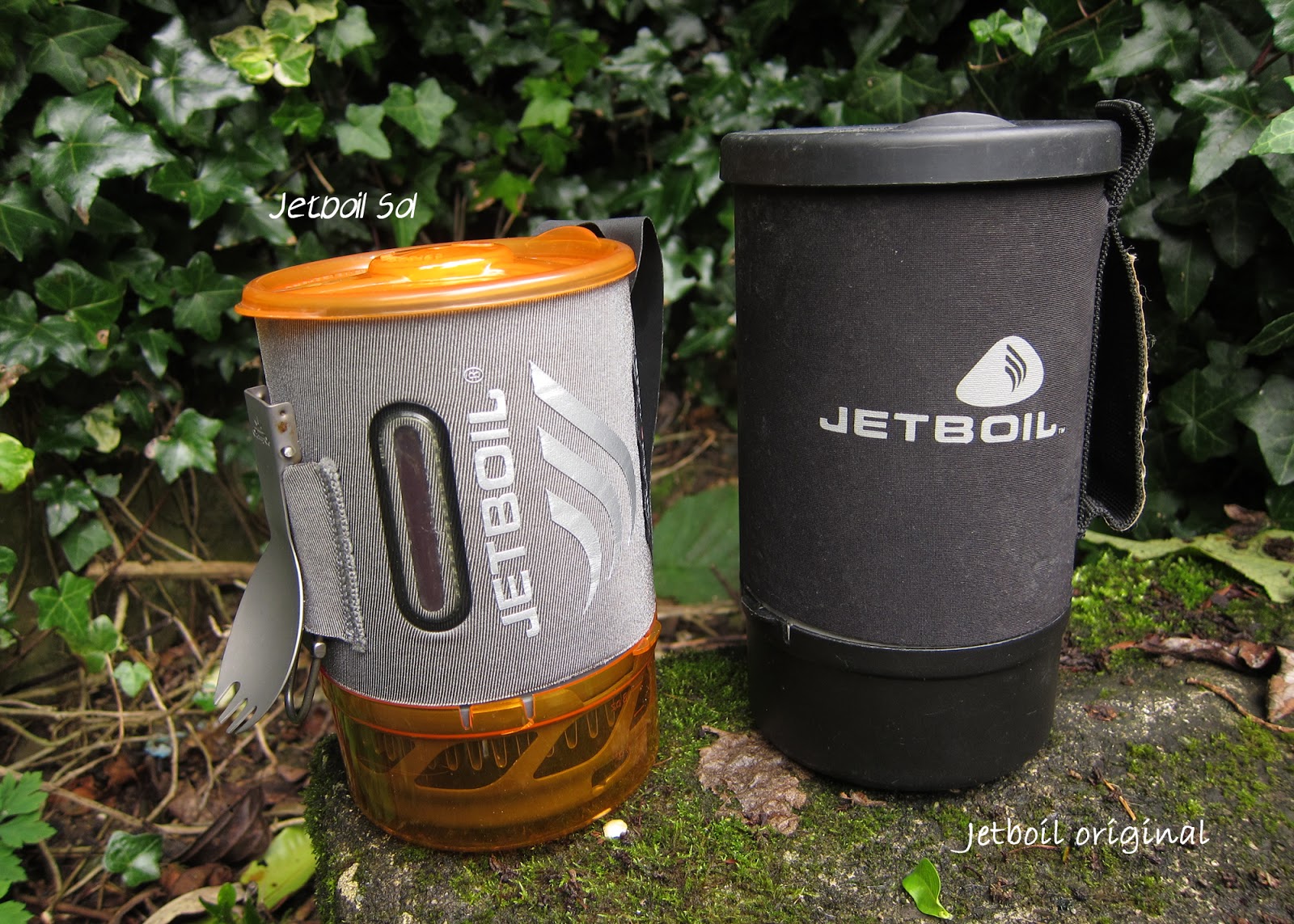
The Jetboil Sol Advanced Cooking System, is currently the new generation of the classic jetboil. The jetboil sol is virtually the same as the titanium model Sol Ti Premium Cooking System, except that it has an Aluminum pot instead of a Titanium pot, and the cozy has a very useful heat indicator strip on it. The heat indicator strip will begin to change from grey to yellow showing you when the water has reached the ideal temperature (see main pic). The system is very compact and inside that 800 ml pot you can fit a universal pot support, a 100 g standard class canister of gas, the burner, and a set of canister legs which provides the pot with support.

Improvements on the original jetboil

I have had the original jeboil for about 7 years and it has worn very well considering its use over the years. Since then Jetboil has made a concerted effort to lighten nearly every component of the Sol Advanced Cooking System. The whole system is generally smaller and lighter and it still has the piezo igniter built into the system. The piezoelectric ignition is also much improved from the original (I actually broke the ignitor on the original after using less than 10 times).The stove can be further lightened by eliminating the top cover, cozy, and bottom cover to reduce the weight to just 213 g. However, not all these lightweight enhancements come with benefits as I have found the robustness of the system has been slightly compromised (see bottom pic).

Performance wise the Jetboil exceeds in boiling water very fast with using a minimum amount of gas to reach boiling point, this is one of the main advantages of using a jetboil over a standard cooking stove as it will save on the amount of gas cannisters you have to take with you and therefore reduce your overall carried weight. Another advantage besides the excellent heating rate and fuel efficiency is that the stove performs well in strong winds and you will generally not need wind protection. A quick word of caution if you have not used a Jetboil before, if you fill the pot beyond 500 ml, be really careful and use a low flame. The Jetboil is a very powerful stove, and you can easily have a boil over. A boil over could cascade boiling hot water on your canister which could cause the stove to have a potentially dangerous flare.


What is good

Lightness, fuel efficiency, good wind resistance, excellent cold resistance and the included pot support allows burner to be used with conventional pots.

What is not so good

I found that the Jetboil Sol has been slightly compromised in its overall robustness in the the drive for lightness. The system can feel quite delicate, particularly with cold hands and I have already broken the bottom cup attachments when attaching the cup to the bottom of the jetboil (see pic). This was only after using it a couple of times.


What is its ideal usage

Fast and light activities where you’ll be cooking dehydrated meals for less than two people. It excels at lightweight backpacking and alpine climbing.

Tech specs:

Boil Time: 16 oz (1/2 Liter) = 2 minutes
Dimensions: 104 mm x165 mm
Volume: 0.8L
Thermo-Regulate technology delivers consistent heat in very cold conditions
Insulating Cozy with heat-indicating display
push-button igniter
Weight (system only): 300g

Friday, 23 November 2012

Blankets vs. sleeping bags: Thermarest Alpine 35 down blanket

A fairly recent trend in lightweight backpacking is a move towards using lightweight blankets or quilts as opposed to the traditional ‘mummy style’ sleeping bag. The reasoning behind this move is to generally cut down on the weight and bulk of traditional sleeping bags. They also have some other advantages which I will touch on later.


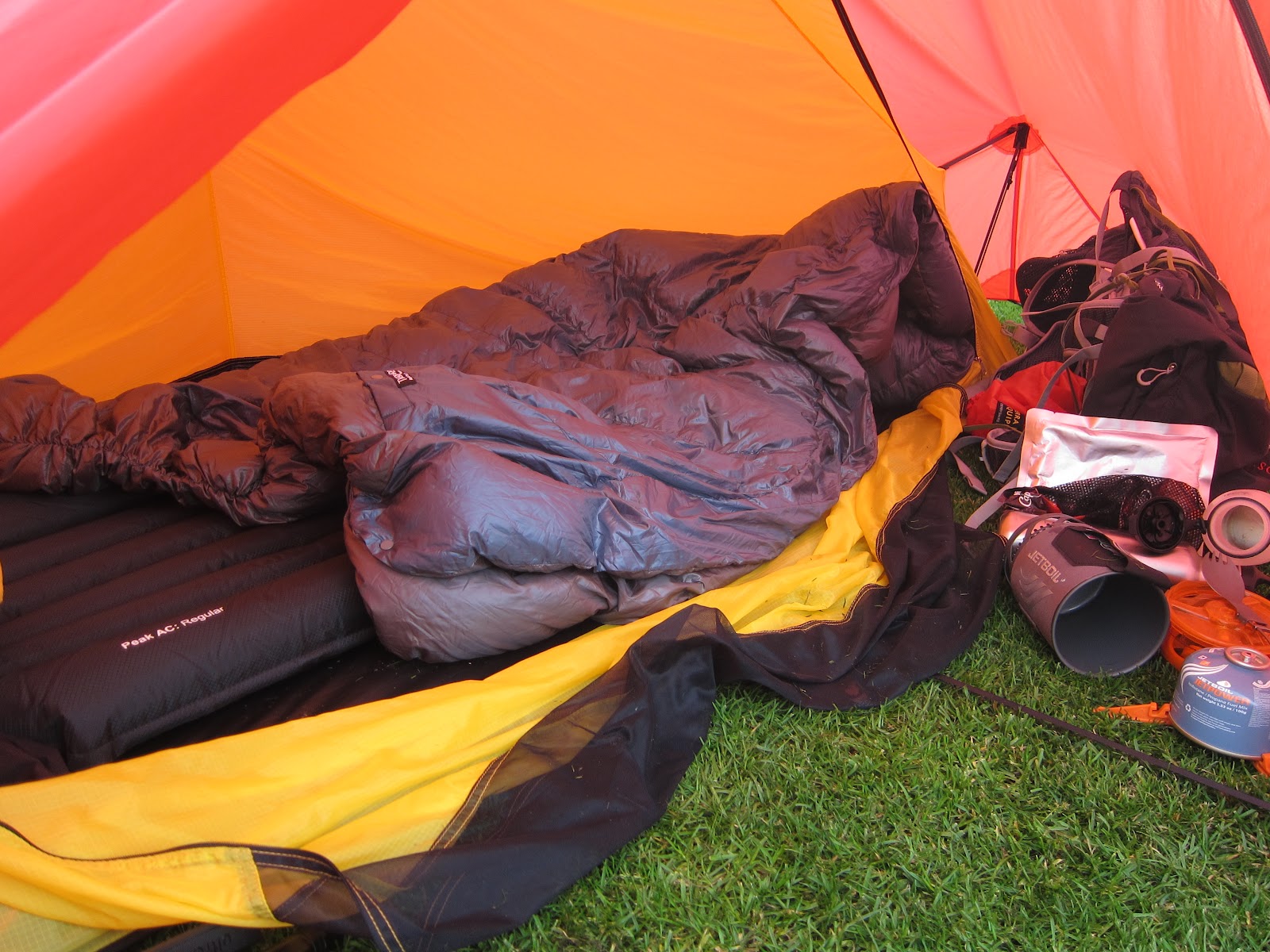
While there are many manufactures having their particular model or take on the blanket/duvet (check out Golight for an alternative). I’ve recently had the chance to test Thermorest’s model called the ‘Alpine down blanket’ over a number of nights. The blanket is generally lighter (624g) in weight than most regular mummy or rectangular sleeping bags mainly because it has an open back and the absence of a zipper or a hood. This also allows the blanket to be packed down to a very small size. Due to having a open back, the blanket simply drapes over you and your sleeping pad to stay warm. The absence of underside insulation should not affect the comfort level as long as you are using a decent sleeping pad with good thermal properties (in this test I was using the Pacific Outdoors 'peak elite ac'). The blanket drapes over the side of the sleeping pad and also has an elasticated foot box that tucks under the sleeping pad to prevent any side drafts (see photo).
Field test: I tested the blanket at ambient temperatures between 7-10 C so I didn’t have the chance to test it at its minimal thermal rating. At these the temperatures the blanket performed very well. However, I think any temperatures below this I would have perhaps would have worn some layers. You may also want to consider wearing an insulated hat due to lack of a hood if the ambient temperatures are low.


Having tested the blanket over a number of nights I have come to the realisation that I am definitely a convert to using blankets as opposed to sleeping bags on wildcamping trips. One of the main reasons for this transition is actually comfort. I have realised that as a predominantly ‘side sleeper’ I found the blanket much more comfortable to use than a traditional sleeping bag where the ‘mummy’ design basically forces you to sleep mainly on your back. The other advantage is that you can get under the covers in a matter of seconds. So after using mummy style sleeping bags for decades camping this transition was surprisingly simple to take. In summary, if you want to cut down on weight and bulk and you are a predominantly a side sleeper the blanket/quilt is definitely worth checking out.
Tech specs:

weight: 624g
length: 193 cm
width: 123 cm
fill: 700 fill goose down

Saturday, 15 September 2012

Small outdoor tablets: Nexus 7 and Galaxy note

One of the reasons small tablets have become pretty popular recently is due to their mapping abilities with GPS and access to dozens of maps including for example the OS Explorer maps. Now that you can download virtually all these maps for free and cache them offline they are becoming very useful for backcountry navigation. I have just been testing out a couple of small tablets for outdoor use namely the google Nexus 7 and the Samsung Galaxy note.

First off the Nexus 7 is considered a proper tablet with a 7 inch screen. Whereas the galaxy note is really a mini-tablet and phone with a 5.3 inch screen. Personally, I think the best form factor for a tablet is around 7 inches as the larger 10 inch screens (ipad, samsung tab, etc) are just too big for carrying around outdoors and you will need two hands to navigate with one.  You can quite easily handle the nexus 7 with one hand. The main advantage of a galaxy notes size is that it still has a fairly large screen but it is still pocketable.

Both tablets perform great with GPS/offline navigation with the larger screen of the nexus 7 being great to map read from. Obviously, these tablets are not just for navigation but are for all the standard media device stuff like books, music and games. The galaxy note has the addition of a FM radio which is quite handy for up to date weather forecasts when you are offline.

On the subject of navigation the galaxy note also has a built in barometer (handy for rough weather forecasting) and with an application it can also become an altimeter. I’m not sure of the technical stuff here (so don’t quote me on this) but I have read that using a GPS alone is not particularly accurate at estimating altitude. With the addition of a barometer the GPS can lock on much faster and give you are more accurate altitude reading. The mapping software built in to android takes advantage of this as it is an option in many mapping apps.


While both tablets perform really well outdoors there are some advantages and disadvantages between the two. The obvious advantage of a galaxy note compared to all other tablets is that it is also a phone so you don’t have to carry two devices with you but still get the advantages of a large screen. The major advantage of the nexus 7 is battery life. The nexus 7 can probably last three times as longer than a galaxy note and boasts one of the best battery life compared to all other tablets and ipads.

Friday, 7 September 2012

Field test: Vibram five fingers


Not really a gear test but my thoughts on the Vibram five fingers as a lightweight trekking shoe alternative. Most of us lightweight trekking types have already long converted from the heavy leather boots of old to trail running shoes as our primary shoes for trekking. But another alternative to try would be the Vibram five fingers. The Vibram five fingers have been around for a number of years mainly used for minimalist running. Here are my thoughts on the Vibrams after using them for a couple of months.
As you probably already know the five fingers have become really popular as running shoes mainly after the book ‘born to run’ by Christopher McDougall. Who quite literally over night popularised the concept of ‘barefoot running’ which has since become very popular among running enthusiasts. This after many years of being told that we have to run with large pads on our heels. If you have never run in barefoot running shoes they will make you run in a more natural way by making you land on the ball of your foot rather than the heel. It is quite literally like running barefoot but with the added protection of the shoe. The feeling is often described as getting back to nature and for eco types almost ‘spiritual’ as you feel more connected to the land you are running across. 

So after using these shoes for running I have also begun to use these shoes for lightweight trekking and backpacking. I can’t confess that I have used them for long-distance trekking but only for walks of about 10-20 km carrying about 5-10 kg. Over these short distances I have found them great and have not had any difficulties. I have heard that some people have used them for extended treks like the Pacific crest trail with varying degrees of success. 
The getting back to nature and releasing the ‘inner hobbit’ is what initially drew me to these shoes as I primarily run in woodlands and on nature trails. The conversion from traditional running shoes was easy for me as I have been running with flat trail shoes for a number of years. However, if you have been running with heavily padded running shoes on roads I would take the conversion a little more cautiously. 

There are certainly times and conditions when you would not use barefoot running shoes for trekking, probably the most obvious one would be in snow as they provide no thermal protection. You probably would not also want to use these shoes if you were trekking over very rocky ground for extended periods as they provide very little padding. It most also be noted that these shoes provide very little protection for your toes and so they are definitely not recommended for scrambling etc. Apart from the disadvantages in certain environments and conditions these shoes are generally a joy to wear and I would definitely use them for lightweight backpacking on certain routes. They also make pretty good camp shoes too.

Sunday, 10 June 2012

Rat ESEE Izula with spalted ash scales


Well the old parachord wrap on my Rat (now called ESEE) Izula knife was getting a bit ropey and instead of redoing the parachord I decided to make some scales instead. I used spalted ash to make the scales. For those unfamiliar with spalted wood the wood has become colonised by fungi which gives it the distinctive markings and it is fairly commonly found in ash and beech trees. The fungi has a dark pigmentation which is known as zone lines. After using the knife for a couple of days I can say that it much more comfortable to handle than parachord particularly when using for extended periods.