Showing posts with label outdoor recipes. Show all posts

Friday, 21 December 2012

Braised venison and hawthorn jelly


A hearty solstice stew with the addition of hawthorn jelly.


Heat oven to 180C/fan 160C/gas 4. Fry the vegetables in a little oil in a heavy-based casserole for 4-5 mins until golden. Tip in the garlic and fry for a further min, then set aside.

Put the venison into a plastic bag with seasoned flour and shake to coat. Add a little more oil and butter to the pan, then fry the venison over a high heat, stirring now and then, until well browned. Don't crowd the pan - cook in batches if necessary. Set aside with the vegetables.

Add the hawthorn jelly and wine to the pan, and bring to the boil, scraping up all the bits that have stuck to the bottom. Pour in the stock, then add the thyme, bay leaf, meat and vegetables. Season if you like and bring to the boil. Cover and transfer to the oven for about 1½ hrs or until tender. Remove from the oven and check the seasoning.

Ingredients:
1 onions , roughly chopped
2 carrots , roughly chopped
50g or swede, roughly chopped
1 celery sticks, roughly chopped
olive oil
1 garlic clove , crushed
500 shoulder of venison , cut into large chunks (or buy ready-cubed venison for stewing)
2 tbsp plain flour , seasoned with salt and pepper
1 tbsp hawthorn jelly or Rowan Jelly (see below)
150 ml dry red wine (Rioja is good) and 100 ml of port or 250 ml of red wine
250 ml beef stock
2 thyme sprigs
1 bay leaf

Hawthorn jelly:
1 kg of hawthorn berries
Juice of 1 lemon
500 ml (pint) of water
Sugar

Bring the berries to the boil with the water and the lemon juice and simmer for 45 minutes. Strain the pulp through a jelly bag for about 6 hours, then discard the pulp and measure the juice. For every 500 ml you need to add 450 grams of sugar. Heat gently until it comes to the boil. Boil rapidly until the jelly becomes firm, remove and leave to set.

Monday, 10 September 2012

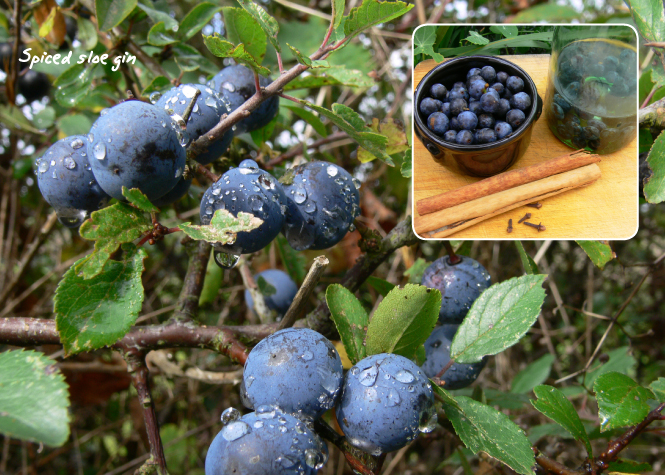
Spiced sloe gin


Now the autumnal fruits are well on their way it’s time to start thinking of some Christmas brews that take a while to develop. While the Hawthorn tree is producing some nice berries for jams etc. see http://www.theoutdoorlab.com/2010/09/hawthorn-jelly-and-apple-mustard-glazed.html


Its bushy spiky cousin the blackthorn is producing the sloes. This is just a traditional sloe gin with a spicy twist. First prick the sloes all over with a sharp fork or needle and place in a large sealable jar. Pour in the sugar and spices and gin. Seal the jar and shake well. Store in a dark place and shake once a week for 2-3 months. When it’s ready strain the sloes and store the sloe gin in a sterilised bottle.

Ingredients: sloes, bottle of gin, sugar to taste (100-200g see below), crushed cinnamon stick, a few cloves and a pinch of nutmeg. Leave for 2-3 months. Enjoy.
450g/1lb sloes 
100- 200g/8oz caster sugar depending on how sweet you want it
1 litre/1¾ pint gin


Sunday, 27 May 2012

Wild fennel cratin


Wild fennel (Foeniculum vulgare) is now very common especially on roadside verges and in hedgerows. It has a very distinctive smell similar to licorice (anise) with the leaves looking like dill and feathery in nature. Traditionally fennel is used with fish dishes (goes particularly well with oily fish like salmon and mackerel) but it can also be used as a flavouring in breads, cakes and in salads. While you can use the leaves and seeds of wild fennel, one of the main differences between wild fennel and supermarket bought fennel is that you will not find a large bulb but more likely a long fibrous root at the base of the plant. The root is not really used in cooking as it is quite bitter instead use the young stalks between the root and the leaves. Fennel stalks are best cooked before the plant goes to seed as they will be quite tough after this.


Wild fennel cratin:


Heat oven to 200C and put a pan of salted water on to boil and add the fennel stalks and cook for 5 minutes. Arrange in an ovenproof dish, season and sprinkle with nutmeg and some chopped garlic. Pour over 200 ml of double cream and top with parmesan cheese. Cook for 20-25 minutes in the over. Serve with salmon fillets or grilled mackerel.

Saturday, 21 April 2012

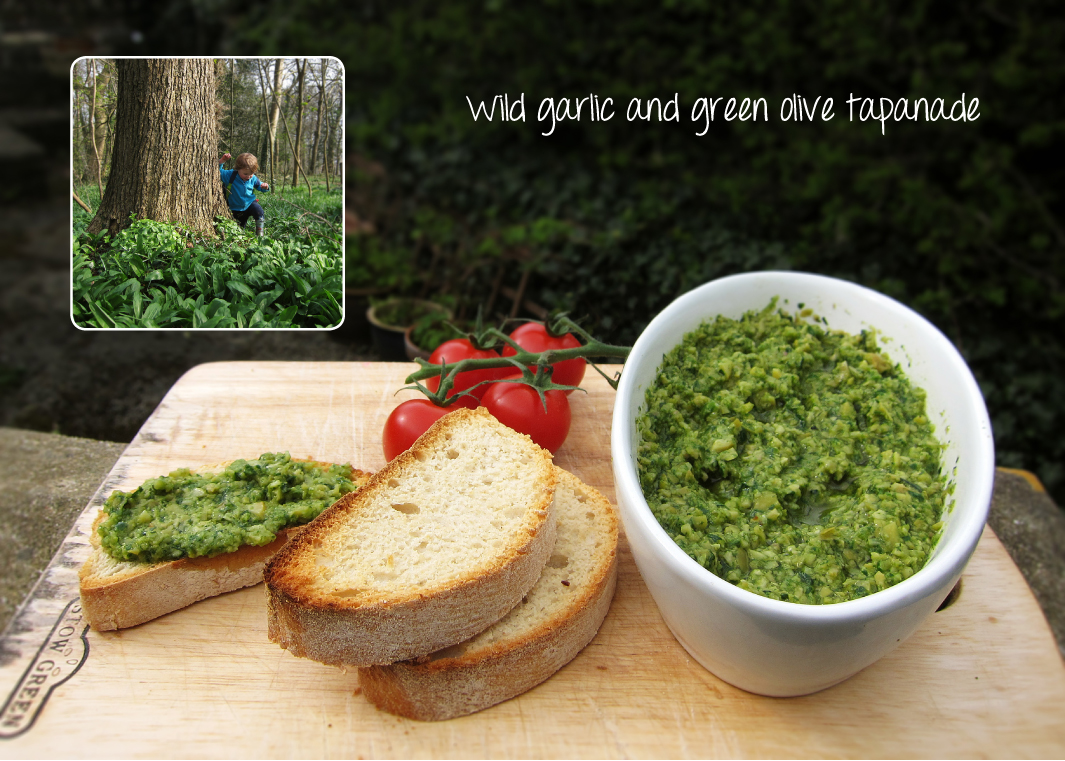
Wild garlic and green olive tapanade


We are just about coming to the end of the wild garlic season but I made this one a few weeks ago. A very simple wild food recipe that adds a garlic zing to a traditional green olive tapenade:


2-4 cups of pitted green olives in brine (drain and rinse)
A couple of bunches of fresh and young wild garlic leaves
Grated zest of half a lemon
Freshly ground black pepper
2-3 Tsb of olive oil

First puree the olives, wild garlic and lemon zest. Add the olive oil after this stage and mix by hand. Serve on crostini or as a dip.

Saturday, 13 August 2011

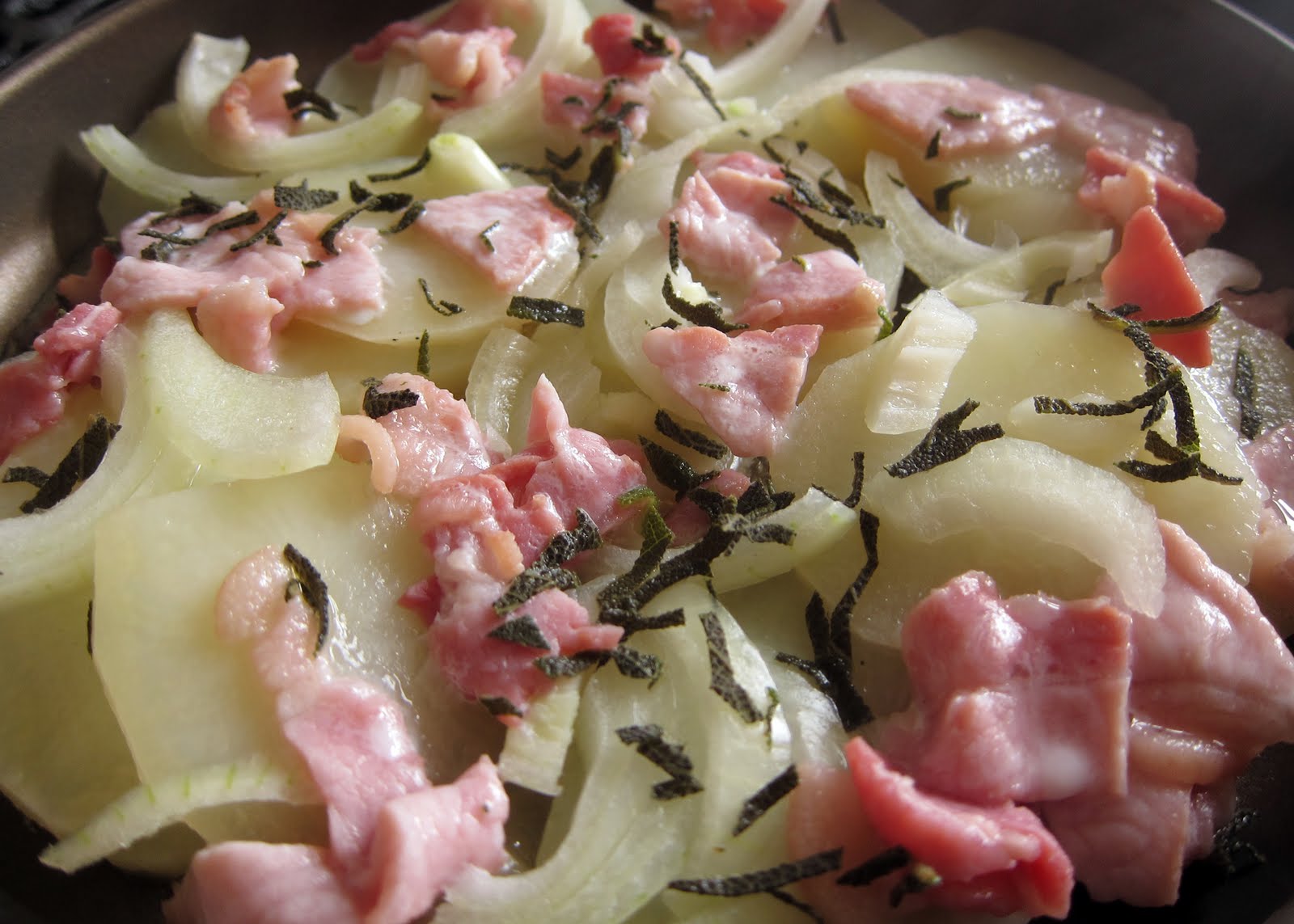
Outdoor cooking: camping tortilla


This is not a wild food recipe, but it is one of my favourite camping recipes (but you can add some wild sage to the mixture if you want). It's very easy to make and can be eaten hot or cold the next day. The camping tortilla is my kind of variant of the potato and onion tortilla but with the added bonus of cheddar cheese and bacon.


Ingredients:
A couple of large potatoes peeled and thinly sliced
One medium sized onion
3-4 slices of smoked back bacon, roughly chopped
Handful of grated mature cheddar cheese
3 free-range eggs
seasoning
olive oil

Heat the oil in a non-stick frying pan (I use the GSI Outdoors pan for this http://www.gsioutdoors.com/). Stir in the potato, onion and bacon and cook gently with the pan covered for 20-30 mins until tender. Beat the eggs and cheese together in a bowl and season to taste. Pour the cooked potato, onion and bacon into the bowl and mix. Heat the pan again till hot and pour the egg mixture in and cook for 2-3 mins, turn over with a plate and cook the other side for 2-3 mins. Obviously for the veggie version, leave out the bacon.