Showing posts with label recipes. Show all posts
Sunday, 27 January 2013
Quick roasted partridge
Nothing fancy about this, just a very quick roast. Brush the partridges with olive oil or butter and season. Place a small onion in the cavity, chuck in a few cherry tomatoes and roast for 30 minutes at 220 C.
Friday, 21 December 2012
Braised venison and hawthorn jelly
A hearty solstice stew with the addition of hawthorn jelly.
Heat oven to 180C/fan 160C/gas 4. Fry the vegetables in a little oil in a heavy-based casserole for 4-5 mins until golden. Tip in the garlic and fry for a further min, then set aside.
Put the venison into a plastic bag with seasoned flour and shake to coat. Add a little more oil and butter to the pan, then fry the venison over a high heat, stirring now and then, until well browned. Don't crowd the pan - cook in batches if necessary. Set aside with the vegetables.
Add the hawthorn jelly and wine to the pan, and bring to the boil, scraping up all the bits that have stuck to the bottom. Pour in the stock, then add the thyme, bay leaf, meat and vegetables. Season if you like and bring to the boil. Cover and transfer to the oven for about 1½ hrs or until tender. Remove from the oven and check the seasoning.
Ingredients:
1 onions , roughly chopped
2 carrots , roughly chopped
50g or swede, roughly chopped
1 celery sticks, roughly chopped
olive oil
1 garlic clove , crushed
500 shoulder of venison , cut into large chunks (or buy ready-cubed venison for stewing)
2 tbsp plain flour , seasoned with salt and pepper
1 tbsp hawthorn jelly or Rowan Jelly (see below)
150 ml dry red wine (Rioja is good) and 100 ml of port or 250 ml of red wine
250 ml beef stock
2 thyme sprigs
1 bay leaf
Hawthorn jelly:
1 kg of hawthorn berries
Juice of 1 lemon
500 ml (pint) of water
Sugar
Bring the berries to the boil with the water and the lemon juice and simmer for 45 minutes. Strain the pulp through a jelly bag for about 6 hours, then discard the pulp and measure the juice. For every 500 ml you need to add 450 grams of sugar. Heat gently until it comes to the boil. Boil rapidly until the jelly becomes firm, remove and leave to set.
Saturday, 22 September 2012
Cauliflower fungus and chargrilled peppers
The cauliflower fungus (Sparassis crispa) is quite unmistakable in its appearance being built of many layers that resemble a cauliflower or brain. The fruit body ranges from 20-50 cm in diameter and it has a short stem that attaches to a tree in which it grows. It can be found in coniferous woods and generally grows on pine trees. The cauliflower fungus grows from late summer to late autumn. The fungus is very tasty and good for eating and also dries well. It is excellent briefly fried in butter or added to a cream sauce. An Italian friend has also used it in a risotto.
Recipe
a fair bit of cauliflower fungus (Sparassis crispa) cleanedchargrilled peppers250 ml chicken stock1 egg yolkpinch of garam masalaChopped coriander leavesSalt and peper Lightly dust the fungus with flour and fry in butter for 2-3 minutes. Add the chargrilled peppers, stock, garam masala and chopped coriander leaves. Reduce the liquid to half and add the egg yolk to thicken. Season to taste.
Recipe
a fair bit of cauliflower fungus (Sparassis crispa) cleanedchargrilled peppers250 ml chicken stock1 egg yolkpinch of garam masalaChopped coriander leavesSalt and peper Lightly dust the fungus with flour and fry in butter for 2-3 minutes. Add the chargrilled peppers, stock, garam masala and chopped coriander leaves. Reduce the liquid to half and add the egg yolk to thicken. Season to taste.
Sunday, 27 May 2012
Wild fennel cratin
Wild fennel (Foeniculum vulgare) is now very common especially on roadside verges and in hedgerows. It has a very distinctive smell similar to licorice (anise) with the leaves looking like dill and feathery in nature. Traditionally fennel is used with fish dishes (goes particularly well with oily fish like salmon and mackerel) but it can also be used as a flavouring in breads, cakes and in salads. While you can use the leaves and seeds of wild fennel, one of the main differences between wild fennel and supermarket bought fennel is that you will not find a large bulb but more likely a long fibrous root at the base of the plant. The root is not really used in cooking as it is quite bitter instead use the young stalks between the root and the leaves. Fennel stalks are best cooked before the plant goes to seed as they will be quite tough after this.
Wild fennel cratin:
Heat oven to 200C and put a pan of salted water on to boil and add the fennel stalks and cook for 5 minutes. Arrange in an ovenproof dish, season and sprinkle with nutmeg and some chopped garlic. Pour over 200 ml of double cream and top with parmesan cheese. Cook for 20-25 minutes in the over. Serve with salmon fillets or grilled mackerel.
Saturday, 13 August 2011
Outdoor cooking: camping tortilla
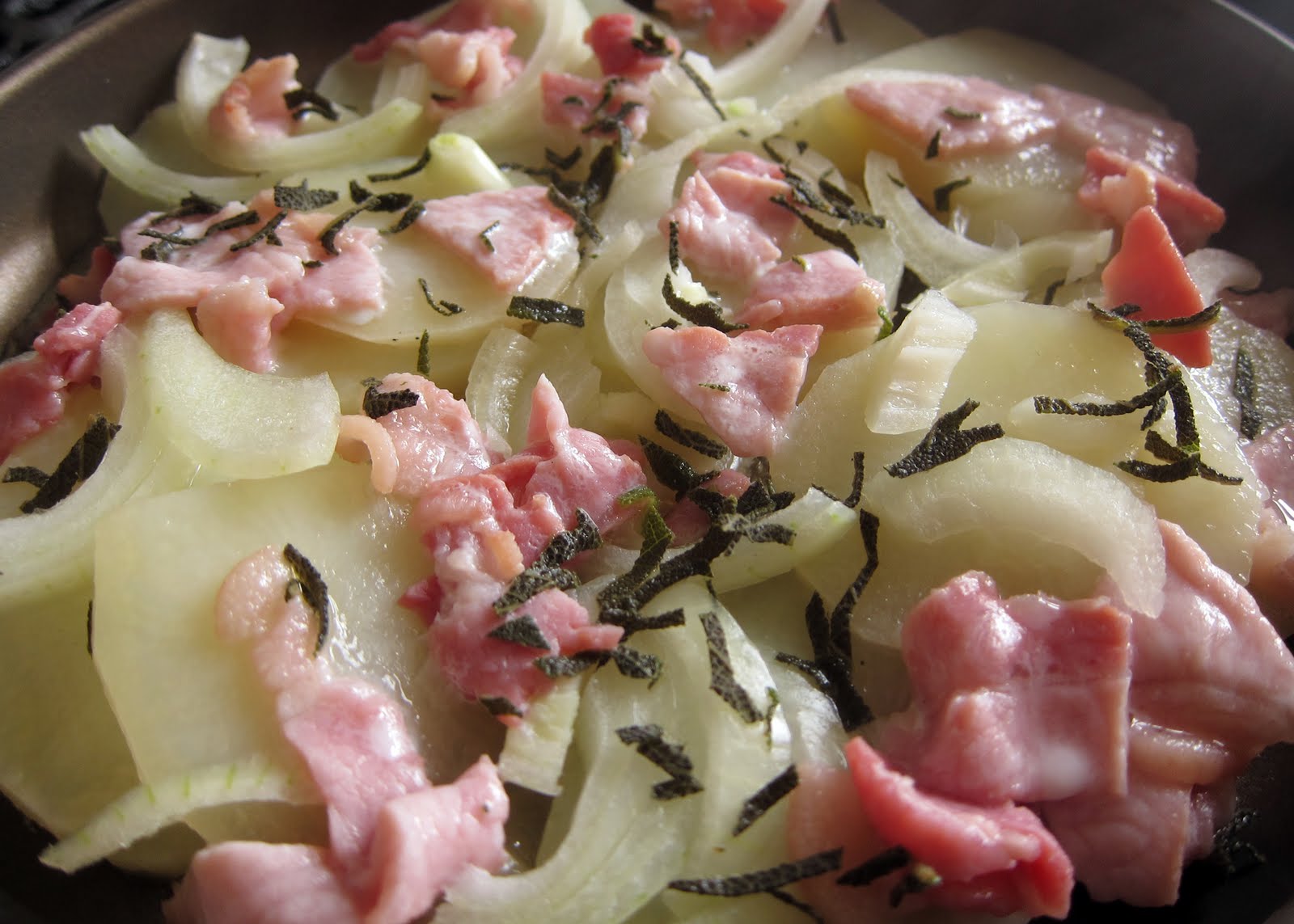
This is not a wild food recipe, but it is one of my favourite camping recipes (but you can add some wild sage to the mixture if you want). It's very easy to make and can be eaten hot or cold the next day. The camping tortilla is my kind of variant of the potato and onion tortilla but with the added bonus of cheddar cheese and bacon.
Ingredients:
A couple of large potatoes peeled and thinly sliced
One medium sized onion
3-4 slices of smoked back bacon, roughly chopped
Handful of grated mature cheddar cheese
3 free-range eggs
seasoning
olive oil
Heat the oil in a non-stick frying pan (I use the GSI Outdoors pan for this http://www.gsioutdoors.com/). Stir in the potato, onion and bacon and cook gently with the pan covered for 20-30 mins until tender. Beat the eggs and cheese together in a bowl and season to taste. Pour the cooked potato, onion and bacon into the bowl and mix. Heat the pan again till hot and pour the egg mixture in and cook for 2-3 mins, turn over with a plate and cook the other side for 2-3 mins. Obviously for the veggie version, leave out the bacon.
Sunday, 24 July 2011
Puff-ball recipe
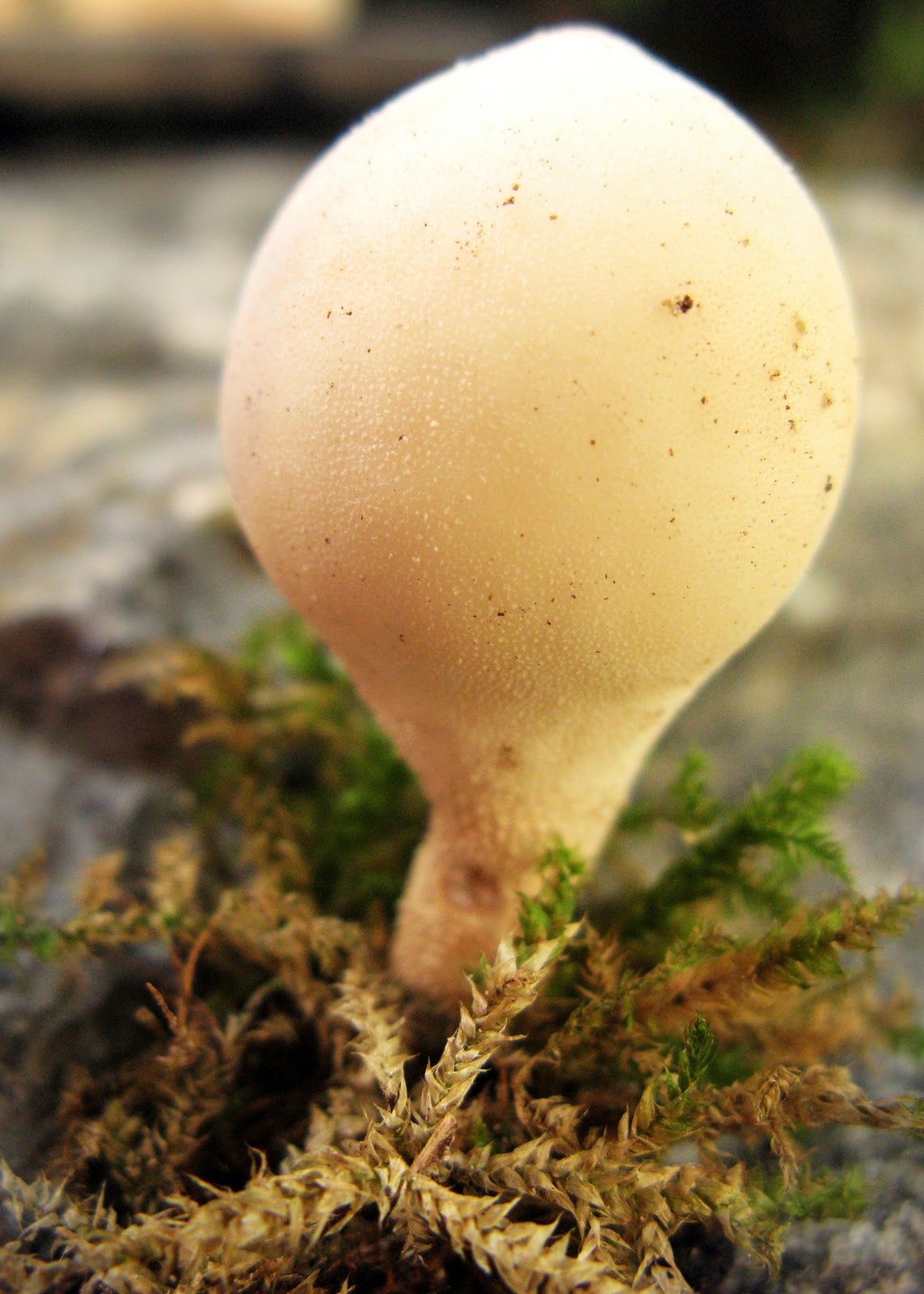
I think this is my first fungi recipe of the year with puffballs appearing in early July to November. There are lots of puff-ball species, the most spectalular being the giant puff-ball (Langermannia gigantea) which is fairly uncommon and probably the best tasting. All puffballs in Britain can be eaten and none are really poisonous, but they can sometimes be confused with earth-balls (Scleroderma citrinum) which are not edible. If you slice a earth-ball you can see the dark spores in the middle. You can only eat puffballs when they are young and without the spore development inside, if you slice a puffball with a knife and it is beginning to yellow, discard them. The sliced puffball should be all white inside. The species I've used in this recipe is Lycoperdon perlatum (common puffball) which is fairly common and grows in clumps in wooodlands (usually between 5 and 10 cm in height). Puffballs are especially suited for quick frying (which I have done here) and can also be dried.
Ingredients: shallots, garlic, lemon juice, white wine, butter, parsley, young puffballs.
Friday, 8 July 2011
Bushbuddy casserole technique
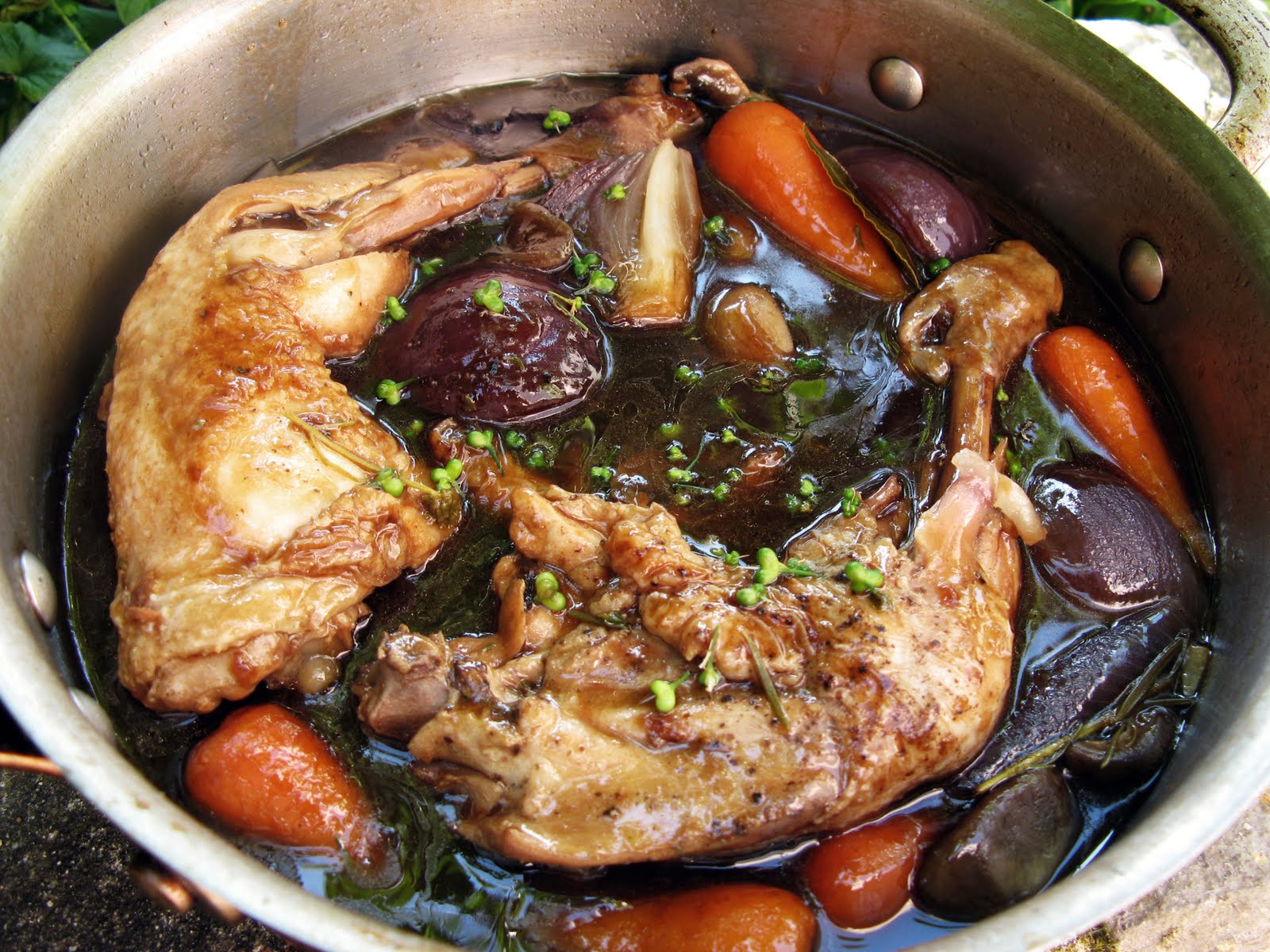
The bushbuddy is a great wood burning camp stove ideal for making a quick brew and such but this time I pushed it a bit harder. I wanted to make a chicken casserole, but as you know this takes about an hour to cook. I've never tried cooking this long on a bushbuddy but this technique worked. Brown the ingredients in a little olive oil over the bushbuddy and then add the chicken stock. Bring the casserole up to boiling point and then remove the pan and cover it with something to insulate it like a spare tee shirt for example. The casserole will continue to cook, after 10 minutes but the pan on the bushbuddy and bring to the boil again. Repeat this process for an hour or so until everything is nicely cooked. Using this technique also cuts down on the fuel used.
Sunday, 19 June 2011
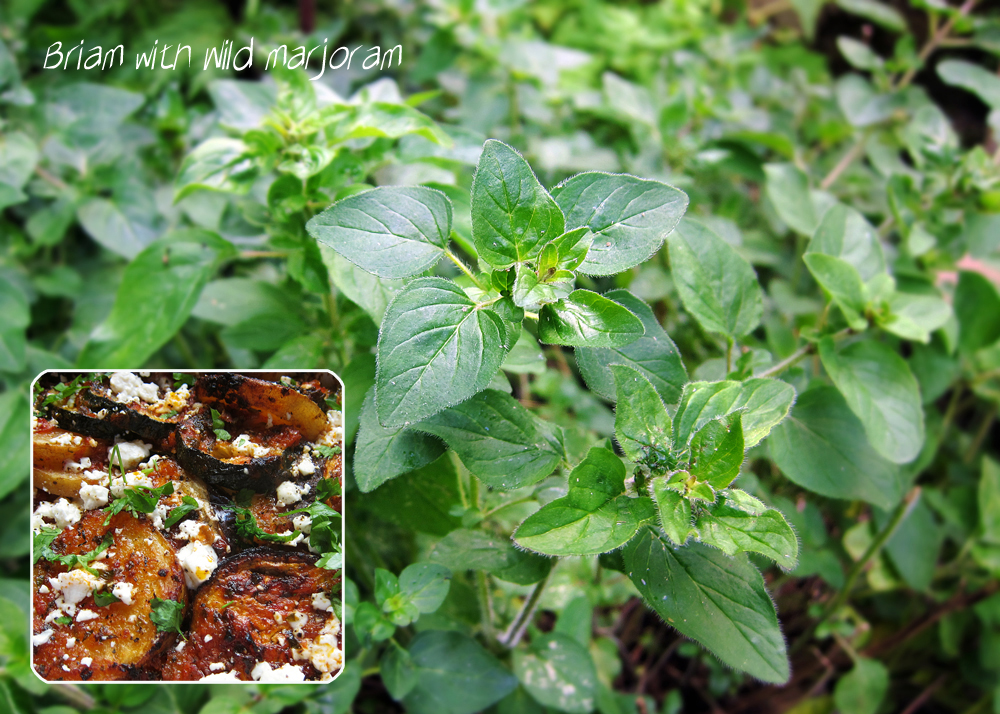
Briam with wild marjoram (vegetable bake)
Briam is a traditional Greek recipe where you oven roast vegetables coated with a savoury tomato sauce. There are, as you can imagine, dozens of different ways to cook this dish so this is by no means an authentic recipe that I made. You can make it with any vegetables that are in season and eat it hot or cold. The secret of the dish is the olive oil (and there is a lot of it) where you bake most of the moisture out of the vegetables replacing it with olive oil.
Ingredients:
Potatoes,
courgettes, aubergine,
green pepper,
onion and garlic,
half a can of tomatoes,
large bunch of wild marjoram,
salt and pepper, 100 ml olive oil,
feta cheese.
Cut the vegetables (potatoes, courgettes, green pepper and aubergine) to approx. 1 cm thick and layer in a baking dish. To make the sauce add fried onions and garlic to 100ml of olive oil and the half tin of tomatoes and puree. Season the sauce and add the chopped wild marjoram. Pour the sauce over the vegtables and bake (200 C) covered with tin foil for approx 45 minutes until the vegetables are cooked. Remove the tin foil and bake for another 30 mins. Finish with some chopped wild mint and feta cheese.
Saturday, 14 May 2011
Beech leaf liqueur
I have been doing this liqueur for quite a few years now and it's probably my favourite wild flavoured drink. This is quite easy to make and involves steeping beech leaves in gin for a number of weeks. This old recipe is thought to originate from south-west England (recipe by Richard Mabey). It will be ready to drink when the liquid becomes a light green colour. Definitely worth a try if you like liqueurs, serve chilled from iced glasses. It kind of has a flavour that reminds me of freshly mowed lawns.
Recipe:
Recipe:
A bottle of gin steeped in beech leaves for 3 weeks
100- 200 g white sugar (depending on how sweet you like it) dissolved in 250 ml of water per pint of gin
100 ml of brandy.
Use young and fresh beech leaves that are stripped from their twigs. Half fill a large container with these leaves and then pour over the gin. Seal and leave for three weeks before straining the liquid off. Dissolve the sugar with the water and add the brandy. Add this to the beech leaf gin and bottle, this should produce almost 2 bottles of beech leaf liqueur.
100- 200 g white sugar (depending on how sweet you like it) dissolved in 250 ml of water per pint of gin
100 ml of brandy.
Use young and fresh beech leaves that are stripped from their twigs. Half fill a large container with these leaves and then pour over the gin. Seal and leave for three weeks before straining the liquid off. Dissolve the sugar with the water and add the brandy. Add this to the beech leaf gin and bottle, this should produce almost 2 bottles of beech leaf liqueur.
Tuesday, 10 May 2011
Ash key pickle
Pickled ash keys is actually a fairly old recipe and a method of pickling them can be found in John Evelyn's Acetaria, a Discourse of Sallets written in 1699. Who goes on to say ' Gather them young, and boil them in three to four waters to extract the bitterness; and when they feel tender, prepare a syrup of sharp whitewine vinegar, sugar and a little water.Then boil them on a very quick fire, and they will become of a green colour, fit to be potted when cold'.
If that does not enlighten you to the process of picking ash keys you can always try this method:
Ingredients: Enough ash keys to fill your preserving jar, 3 tablespoons of brown sugar, teaspoon of salt, bay leaves, peppercorns and enough spiced pickling vinegar to cover the keys.
Remove the stalks and bring to the boil in a pan for 5 minutes, drain and then repeat process (allow to cool). In a bowl mix the spices, sugar, salt and pickling vinegar until dissolved. Pour the liquid into the jar with the ash keys, seal and store in a cool place.The pickling process will take about 3 months leaving ample time to figure out what to do with theses buggers!
Saturday, 30 April 2011
Braised wood pigeon with westcountry cider
I have just noticed that virtually all my wild food recipes are exclusively vegetarian, so it is time to get more carnivorous so to speak. A couple of years ago when I was in the mountains of northern Italy I had a really nice Italian meal (where no pasta was involved for a change!) which consisted of a whole wood pigean stuffed with peaches. Not being able to speak Italian I have no idea how the cook prepared it, so I thought I would try and create something similar. The main idea of the recipe is to create a naturally sweet sauce to compliment the gamey meat. To me personally I think wood pigeon is a really underrated as a game bird and I much prefer it to pheasant, but no one seems to eat it anymore.
Being a westcountry lad, I've added some westcountry cider to this recipe but you could use any good quality dry cider.
Ingredients: wood pigeon, organic dry westcountry cider, apples, onion, olive oil, butter, bayleaf, sprig of thyme. First fry the wood pigeon, onions and apples in olive oil until golden brown and then place in a deep saucepan. Cover the ingredients with cider and braise on a low heat for about an hour. Remove the ingedients from the pan and then reduce the liquid down to a required quantity. You should produce a fairly sweet and thick sauce to pour over the wood pigeon.
Sunday, 10 April 2011
Wild salad leaves
Probably the most well known wild salad leaves are the dandelion which is still served in some restaurants in France. For the best wild salad leaves always use the young leaves as the plant tends to get older the leaves can turn quite bitter. You can always stand the salad leaves in water overnight which can reduce the bitterness. Use a light dressing of olive oil and a squeeze of lemon juice.
Good base salad plants:
Pennywort (Umbilicus rupestris)
Lady's smock (Cardamine pratensis)
Celandine leaves (Ranunculus ficaria)
Hawthorn leaves (Crataegus monogyna)
Dandelion (Taraxacum officinale)
Watercress (Rorippa nasturtium-aquaticum)
Sharp-tasting leaves:
Wood Sorrel (Oxalis acetosella)
Wild herbs good in salads:
Wild marjoram (Origanum vulgare)
Sunday, 3 April 2011
Last of this seasons wild garlic recipe
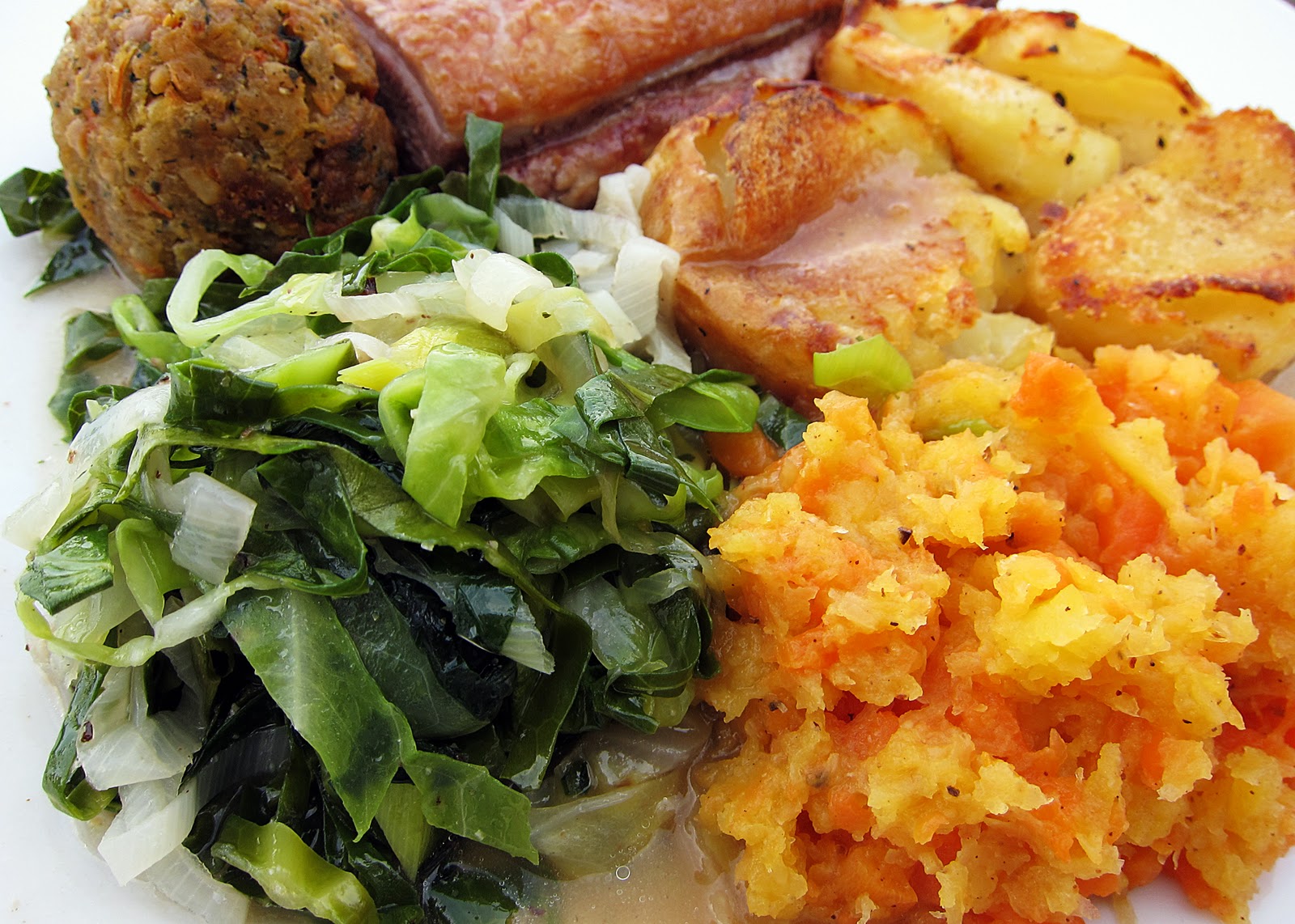
This is just a simple vegetable accompaniment to a sunday roast dinner, or anything you can think of, using this years wild garlic crop. Although you can eat wild garlic well into the spring, the first month is when the young leaves are at their best for cooking. Take equal amounts of sweetheart cabbage and wild garlic and a medium sized leek and shred into thin strips, steam until the vegetables are tender (approx. 5-8 minutes).
Saturday, 5 March 2011
Wild garlic and potato dauphinoise
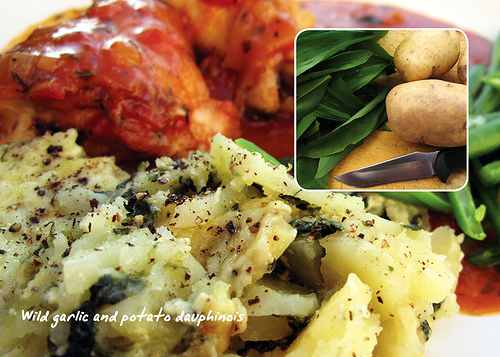
It has become a bit of a tradition over the last couple of years to celebrate the beginning of spring with a wild garlic recipe. The wild garlic has just appeared over the last week in my local woods and this is when the young leaves are at their best. Here is a twist on a traditional potato dauphinoise recipe.
Recipe:
Blanche the wild garlic and chop. Create alternate layers of thinly sliced potato and wild garlic and so on finishing with potato. Pore over the infused milk/cream, cover and cook for 40 minutes (200 C), remove cover and finish with some cheese for 10-30 mins or until top layer is browned.
For the dauphinoise: double cream and milk, bay leaves, salt and pepper, pinch of nutmeg and some butter.
Sunday, 24 October 2010
Autumn stuffing with chestnuts and blackberries
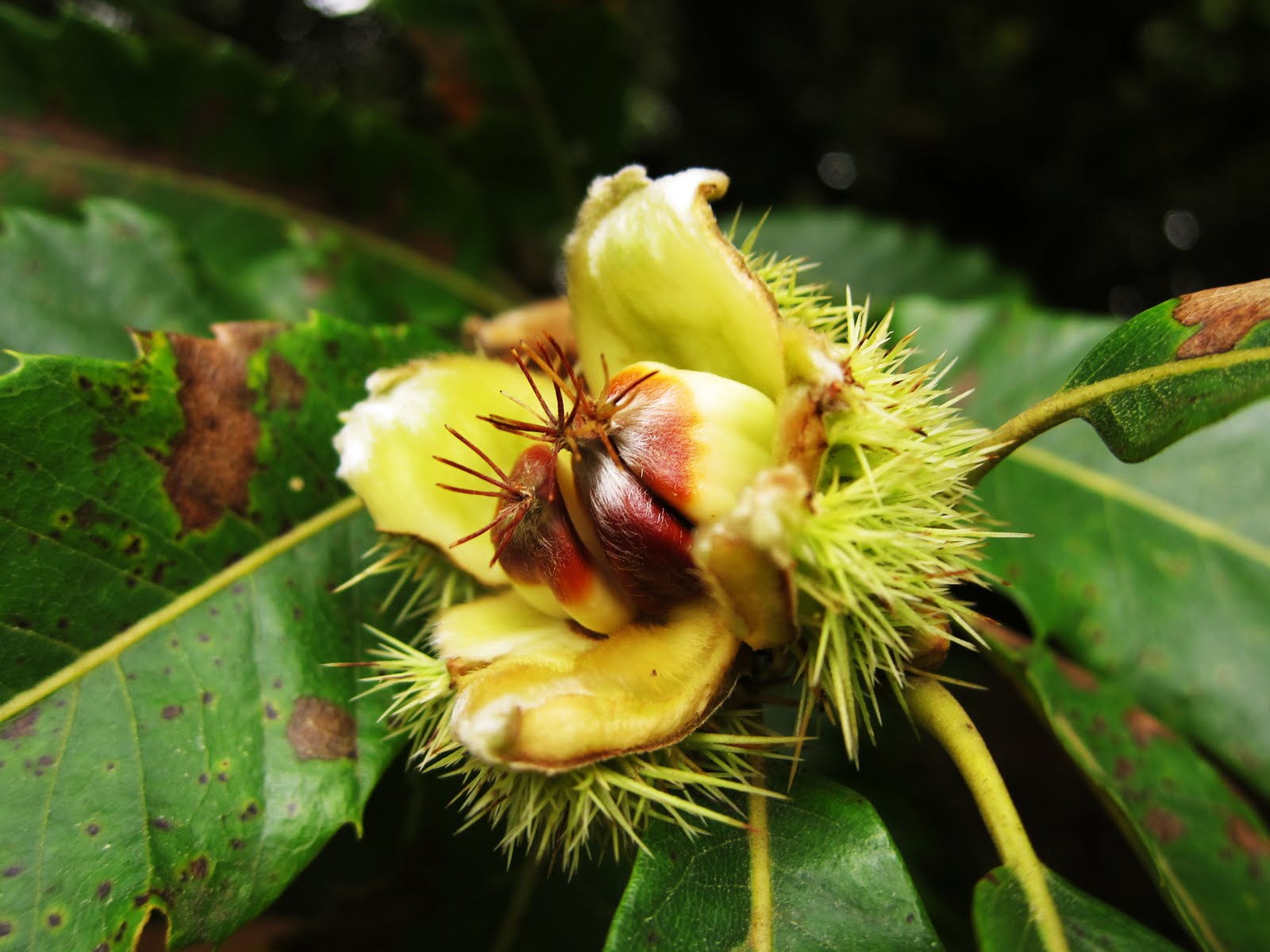
I know chestnut stuffing is pretty common in supermarkets especially at Christmas but I've never actually tried to make it myself. Call it an Autumn stuffing mix, I combined wild chestnuts with some blackberries that I collected from our local woods.Mix enough dried seasoned bread crumbs with an equal amount of ground roasted chestnuts. Add some fresh sage, a finely chopped onion and a handful of blackberries to the mix. Bind with some warm water and olive oil. Stuff inside your chicken or role up into small balls and roast for 20 minutes at 200C.
Sunday, 10 October 2010
Rose hip syrup
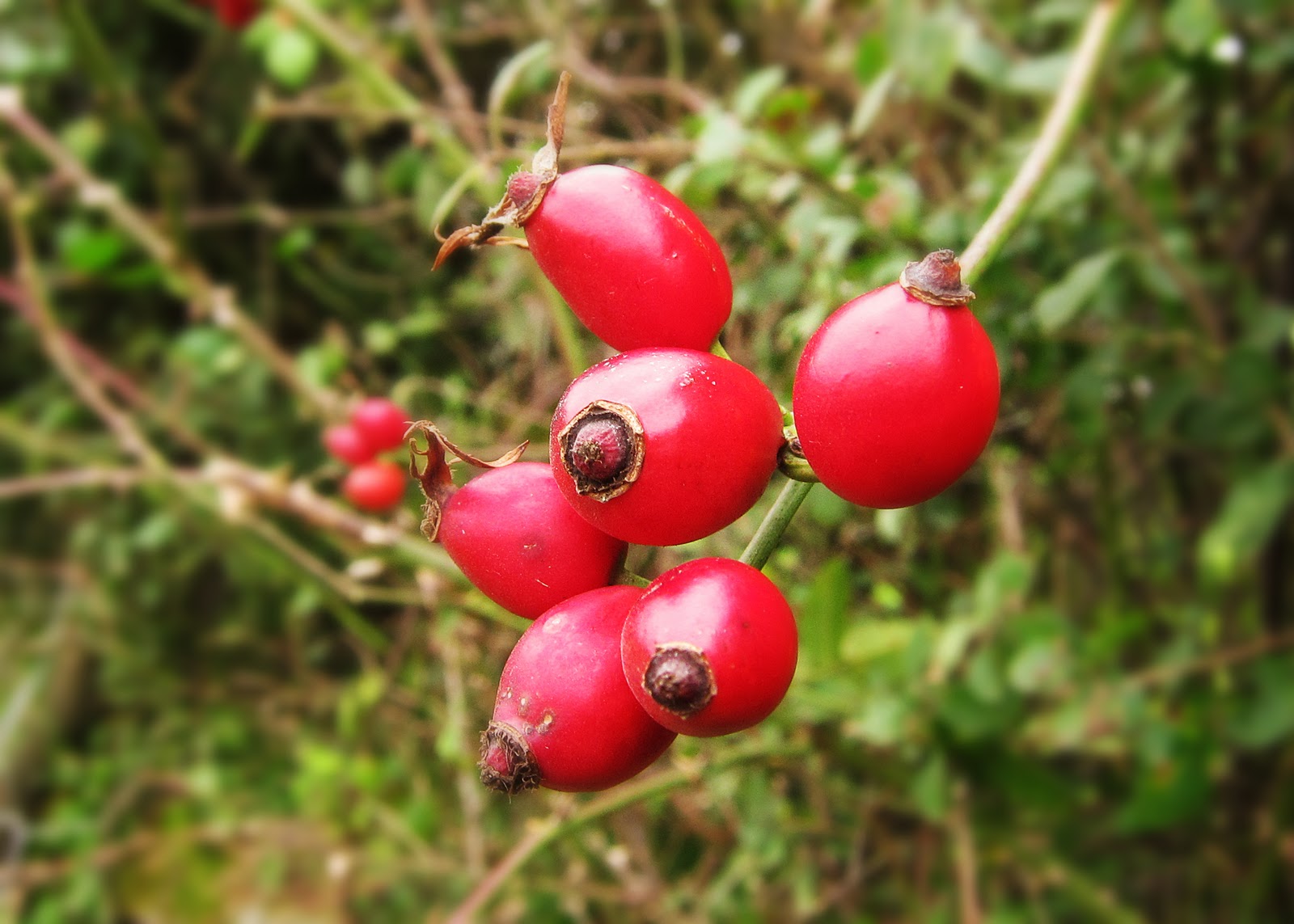
Rose hips, berries from the dog rose, can be made into a variety of jellies, preserves but it's most famous for making syrup. The berries need to be fully ripened before using. Rose hips have a very high content of vitamin C and in the past have been used for various aliments, the most popular being a preventative for the common cold. During the Second World War in England they were even collected on a massive scale to make rose hip syrup, which was used for expectant mothers and their infants. North America's early settlers also used the native variety (the meadow rose: Rosa blanda) to make a soothing syrup used for itches and sores.
Recipe:
500 g of rose hips
200 g of sugar
1.5 litres of water.
Chop rose hips finely and put into 1 litre of boiling water. Bring back to the boil. Remove from heat and let infuse for 15mins. Finely strain the rosehips till the bulk of the liquid has been collected. Return the pulp to the saucepan with the remaining water. Re-boil and infuse again for 10mins and then strain again. Pour the juice into a clean saucepan and simmer until the right consistency and then add the sugar, boil for 5 mins and then bottle. Rosehip syrup is good on ice creams and in smoothies.
Sunday, 12 September 2010
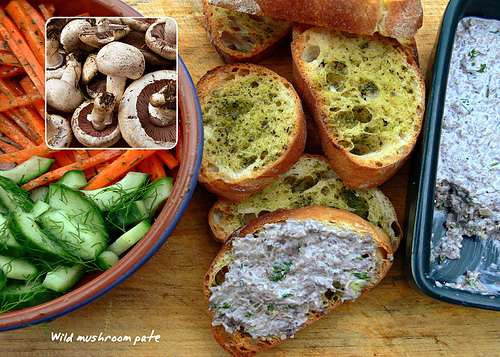
Wild mushroom pate
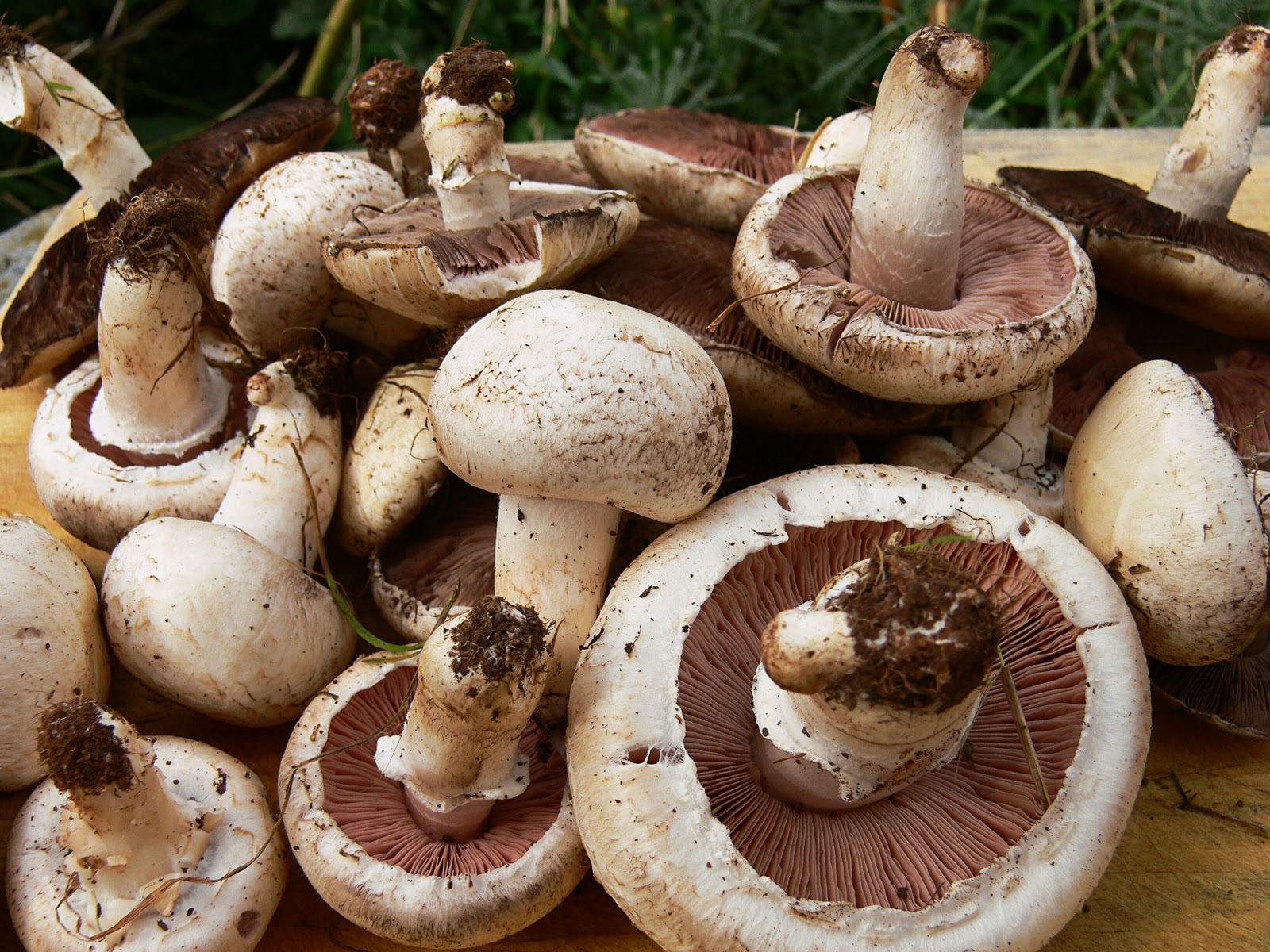
As the season of 'mists and mellow fruitfulness' begins to gently envelop the land it's time to enjoy a fungal foray around my local fields. Luckily I came across a field peppered with field mushrooms, so many in fact, I decided to make a pate from the excess.
Wild mushroom pate
250g of mushrooms (horse mushrooms, field mushrooms, parasol mushrooms, St Georges Mushrooms, etc)
3 finely chopped shallots
2 cloves of garlic
Butter
dry white wine
teaspoon of dark soy sauce
Rosemary, thyme and parsley
2-3 tablespoons of softened cream cheese
Salt and lots of black pepper
In a large pan, melt the butter over medium-high heat. Add the shallots and garlic and cook, stirring, until soft and fragrant, 2 to 3 minutes. Add the mushrooms and cook, stirring, until wilted and starting to brown. Add the wine, thyme, rosemary, soysauce, salt, and pepper, and cook, stirring, until the wine is nearly all evaporated, 5 minutes. Add lots of parsley and cook for 30 seconds. Transfer to a food processor. Process with the cheese until well combined. Adjust seasoning, to taste. Transfer to a dish or bowl, cover and refrigerate until set, 3 to 4 hours. Serve chilled.
Sunday, 5 September 2010
Hawthorn jelly and apple-mustard glazed pork

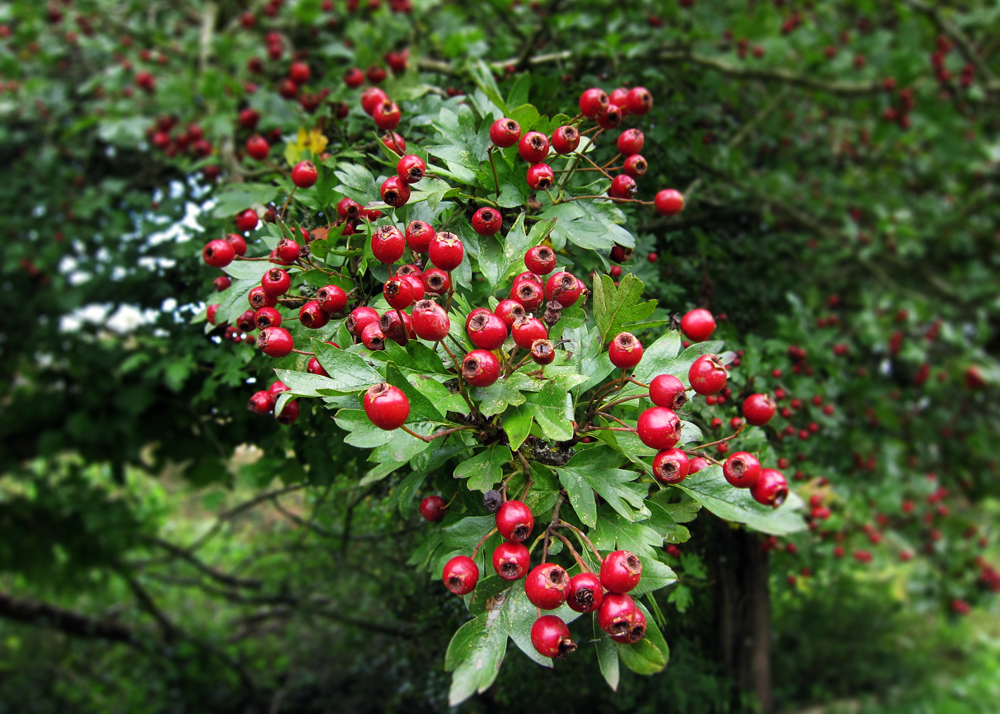
This is simple jelly made from Hawthorn (Crataegus monogyna) berries (haws) that takes advantage the abundant berries around this time of year in late summer/early autumn.
Hawthorn jelly:
1 kg of hawthorn berries
Juice of 1 lemon
500 ml (pint) of water
Sugar
Bring the berries to the boil with the water and the lemon juice and simmer for 45 minutes. Strain the pulp through a jelly bag for about 6 hours, then discard the pulp and measure the juice. For every 500 ml you need to add 450 grams of sugar. Heat gently until it comes to the boil. Boil rapidly until the jelly becomes firm, remove and leave to set.
Hawthorn jelly and apple-mustard glazed pork:
olive oil, 1 medium onion, 2 cloves garlic, 2 cups apple juice, 2 dessertspoons of hawthorn jelly (made earlier), oregano, sage, 2 tablespoons Dijon mustard, splash of lemon juice,
splash of Worcestershire sauce, Salt and black pepper to taste.
To make the glaze: Add 3 tablespoons of the olive oil, onions and garlic to a medium-size saucepan and cook on high heat for 3 minutes. Add apple juice and cook until 1 cup of liquid remains, about 15 minutes. Add honey, oregano and sage. Continue to cook until glaze is syrupy-thick enough to coat the back of a spoon. Add the Dijon mustard, lemon juice, Worcestershire sauce, salt and black pepper to taste. Remove from heat.Preheat oven to 350 degrees. Place a large sauté pan on stovetop. On high heat, add 1 tablespoon olive oil and sear pork on all sides for about 5 minutes. Place in oven and roast about 30 to 45 minutes or until internal temperature shows about 135 degrees on an instant-read thermometer; glaze pork 3 or 4 times during roasting process. Slice roast and serve. Makes 6 servings.
Tuesday, 17 August 2010
Baked wild trout
If I know I’m wild camping near a lake or river I usually take with me a lightweight telescopic spinning rod and some spinners to catch some trout as it’s always nice to catch some wild food. I use a small Fladen Maxximus 210cm (7 foot) spinning rod which is made of carbon fibre and weighs in at 125 g. Although a pretty small spinning rod it is good enough for medium sized trout and similar sized fish.
Baked wild trout
Stuff the trout with wild herbs (in this case I used garlic butter) and seal in tinfoil so it will naturally steam and then crisp while cooking. Place the trout on some fire embers; this should take about 10 minutes to cook (depending on how hot the embers are). Alternatively, you can cook the trout over the open fire by skewing the trout with a stick and then spreading out the fillets with some smaller skewers.
Sunday, 11 July 2010
Sea beet gratinee (Beta vulgaris)
Sea beet (Beta vulgaris) sometimes called wild spinach is a fairly common perennial that occurs along the seashore from shingle beaches, sea walls and the drier parts of salt marshes. It is thought to be the ancestor of all cultivated varieties of beet from beetroot to spinach - beet. However, the root has not any real value as a food source but the leaves form a good green vegetable. They can make a useful and tasty substitute for spinach.
Recipe: Strip the stalks and midrib and cook for a couple of minutes and drain. For the béchamel sauce: 50g butter, 2 tablespoons flour, 1 teaspoon Dijon mustard, 150 ml of milk/crème fraiche, lots of mature cheddar cheese and salt and pepper. Cook for about 20 mins at 200 C.
Subscribe to:
Posts (Atom)